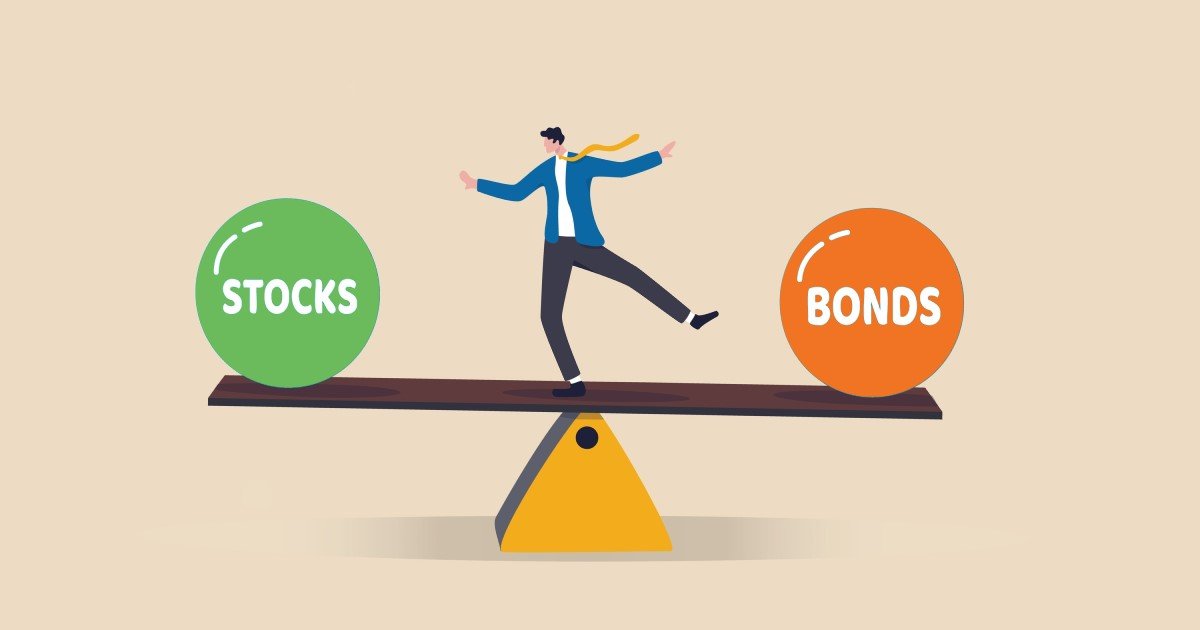
Stocks vs. Bonds: The Beginner’s Guide to Choosing Where to Build Wealth
Stocks make you an owner. Bonds make you a lender. Here is how to choose the right mix for your timeline, taxes, risk tolerance, and wealth-building goals.
Educational Disclaimer: This article is for educational purposes only and should not be treated as financial, investment, tax, legal, or retirement planning advice.
Reader note: Investment returns are not guaranteed. Stocks, bonds, bond funds, and other securities can lose value. Taxes, inflation, fees, and account rules can change. Consider speaking with a qualified financial or tax professional before making investment decisions.
Key takeaways
- Stocks make you an owner. Bonds make you a lender.
- Stocks usually offer higher long-term growth potential, but they come with more volatility.
- Bonds usually offer more predictable income and stability, but they have lower long-term upside.
- Taxes matter because stock gains and bond interest can be taxed differently.
- Inflation can quietly reduce the real value of fixed bond income.
- The right mix depends on your timeline, risk tolerance, income needs, tax situation, and behavior.
- Most beginners do not need a perfect allocation. They need a simple plan they can follow and rebalance over time.
Table of Contents (click for details)
- Stocks vs. Bonds: The Beginner’s Guide to Choosing Where to Build Wealth
- Section 1: The Core Distinction That Drives Every Investment Return
- Section 2: Return Mechanics and How the IRS Takes Its Cut in 2026
- Section 3: Risk Profiles and the Volatility Pitfalls Most People Misunderstand
- Section 4: Which Strategy Fits Your Timeline and Income Goals
- Section 5: The Rebalancing Act: The Portfolio Strategy Worth Knowing
- Section 6: How to Make Your Final Asset Allocation Decision
- Section 7: The Bottom Line on Stocks vs. Bonds: Which One Fits You?
- Subscribe to Beelinger
- FAQ
- Sources
Stocks vs. Bonds: The Beginner’s Guide to Choosing Where to Build Wealth
Over a 30-year career, the difference between owning productive assets and lending money to them can become a six-figure wealth gap. That is the real stakes behind the stocks vs. bonds decision.
In 2026, investors are not living in the zero-rate world of the early 2020s. Cash pays something. Bonds finally offer visible yield. Inflation has cooled from its worst spike, but it is still strong enough to punish lazy money. Stocks remain volatile, expensive in some areas, and still the main engine of long-term wealth creation.
So the real question is not, “Are stocks or bonds safer?”
The better question is: Are you acting as an owner or a lender?
Stocks make you an owner. Bonds make you a lender. Owners accept volatility because they participate in growth. Lenders accept fixed payments because they want predictability. That tradeoff sits at the center of every serious portfolio decision: risk premium vs. guaranteed return.
The Core Distinction That Drives Every Investment Return
Stocks and bonds both help investors earn returns, but they do it in completely different ways.
Stocks generate returns through ownership. You buy a piece of a company. If the company grows revenue, increases profits, expands margins, pays dividends, or becomes more valuable in the market, your shares can rise. Your upside is not fixed.
Bonds generate returns through lending. You lend money to a company, government, or municipality. In return, the borrower promises to pay interest and return your principal at maturity. Your upside is mostly defined from the start.
That one difference changes everything: return potential, tax treatment, volatility, inflation exposure, and emotional difficulty.
How Stocks work (Owning a piece of the engine).
When you buy a stock, you are buying a claim on a business.
That business may own factories, software, patents, customer relationships, distribution networks, data, inventory, brands, or cash. If the company becomes more profitable over time, your ownership stake can become more valuable.
Stocks can reward you in two main ways:
1. Capital appreciation.
This happens when the stock price rises. If you buy a stock fund at $100 per share and it rises to $180, your gain is $80 per share before taxes.
2. Dividends.
Some companies pay part of their profits to shareholders. These payments can be reinvested, used as income, or held as cash.
The key advantage of stocks is that your return is tied to the growth of productive businesses. If companies raise prices, sell more products, improve technology, expand globally, or become more efficient, shareholders can benefit.
That is why stocks are usually the primary engine for long-term wealth building.
But there is a cost: uncertainty.
A stock can fall 20%, 30%, or 50% during a severe downturn. Even diversified stock index funds can have painful drawdowns. The market does not pay high long-term returns because it feels comfortable. It pays them because investors must tolerate price swings, bad headlines, recessions, and long periods of doubt.
How Bonds work (Lending money to the system).
When you buy a bond, you are lending money.
The borrower might be:
- The U.S. government, through Treasury bonds.
- A corporation, through corporate bonds.
- A city or state, through municipal bonds.
- A federal agency, through agency bonds.
In return, the borrower typically agrees to pay you interest on a schedule and return your principal when the bond matures.
For example, if you buy a 5-year bond with a 4.5% coupon, you expect to receive interest payments and get your principal back at the end, assuming the borrower does not default.
Bonds can reward you in three main ways:
1. Interest income.
This is the main return source. You get paid for lending.
2. Price appreciation if interest rates fall.
Bond prices usually rise when market rates decline.
3. Stability during certain market downturns.
High-quality bonds, especially U.S. Treasuries, can help cushion a portfolio when stocks fall.
But bonds also have limits. A bond does not make you an owner. If the borrower becomes wildly more successful, you do not share in that upside. You still receive the agreed interest and principal.
That is the trade: less upside, more predictability.
Why “Volatility vs. Certainty” is the real equation
Many beginners think stocks are “risky” and bonds are “safe.”
That is too simple.
A better frame is:
Stocks give you uncertain short-term prices but stronger long-term growth potential.
Bonds give you more certain income but weaker long-term wealth-building power.
Stocks are dangerous if you need the money soon. Bonds are dangerous if you rely on them too heavily for decades and inflation quietly eats away your purchasing power.
This is the real equation:
Can you tolerate volatility today to pursue higher wealth tomorrow?
Or do you need certainty today, even if it limits your long-term upside?
That question matters more than any single forecast.
Return investment and How the IRS Takes Its Cut in 2026
Your investment return is not just what the market gives you.
It is what you keep after taxes, inflation, fees, and bad timing.
In 2026, this matters because the tax code treats different investment returns very differently. Stocks often receive better tax treatment than bond interest, especially when held for more than one year. Bonds can still be useful, but in taxable accounts, their after-tax return can be less attractive than the stated yield suggests.
Capital gains vs. ordinary income
Stocks can create taxable income in two main ways: capital gains and dividends.
If you sell stocks or stock fund after holding it for more than one year, the gain is usually treated as a long-term capital gain. In 2026, long-term capital gains generally fall into preferential federal tax rates of 0%, 15%, or 20%, depending on taxable income.
Qualified dividends are usually taxed at the same preferred long-term capital gains rates.
That is a major advantage.
Bond interest is different. Interest from most corporate bonds is generally taxed as ordinary income. That means it can be taxed at your regular marginal income tax rate, which in 2026 can be much higher than the capital gains rate for many investors.
For example:
A young professional in the 22% ordinary income bracket may pay 22% federal tax on corporate bond interest. But if that same investor holds a stock fund long enough and sells shares later, long-term gains may be taxed at 15% or possibly 0% in a low-income year.
That gap is not trivia. It affects compounding.
If two investments both earn 5%, but one is taxed every year at ordinary income rates and the other compounds with lower deferred tax treatment, the after-tax result can be very different over time.
The 2026 tax-drag problem
The biggest tax issue with bonds is not just the rate. It is the timing.
Bond interest is usually taxed every year when earned. That creates annual tax drag.
A taxable bond fund yielding 4.5% may look attractive at first. But if you are in a 24% federal tax bracket, the federal tax alone could reduce that yield to about 3.42% before state taxes.
That is before inflation.
This is why many investors prefer to hold taxable bonds inside retirement accounts such as:
- Traditional IRAs
- Roth IRAs
- 401(k)s
- 403(b)s
- 457 plans
Inside those accounts, bond interest may grow tax-deferred or tax-free, depending on the account type. That can make bonds more efficient.
In a regular taxable brokerage account, bond interest can still make sense. But you need to compare the after-tax yield, not just the headline yield.
This is especially important in 2026 because interest rates are no longer near zero. Bonds finally offer meaningful income again, but meaningful income also means meaningful taxes.
Inflation: The hidden tax on fixed income
Inflation is brutal for lenders.
If you own a bond that pays a fixed rate, inflation reduces the real value of those future payments. You still receive the same dollars, but those dollars may buy less food, rent, gas, healthcare, travel, and housing.
This is the hidden tax on fixed income.
For example, a bond paying 4% does not truly grow your purchasing power if inflation is running near 3.8%. Your real return before taxes is only about 0.2%. After taxes, it may be negative.
Stocks have a natural long-term advantage here because companies can sometimes adapt to inflation. They can raise prices, improve productivity, cut costs, expand margins, or shift capital toward higher-return projects.
Not every company succeeds. But as a broad asset class, equities have a better long-term chance of outpacing inflation because they represent ownership in businesses that can adjust.
Bonds offer stability. Stocks offer adaptability.
That difference matters when your time horizon is measured in decades.
Risk Profiles and the Volatility Pitfalls Most People Misunderstand
The mistake most beginners make is thinking risk means “the price went down.”
That is only one type of risk.
A better investor understands several risks at once:
- Market risk
- Inflation risk
- Interest rate risk
- Default risk
- Tax risk
- Behavior risk
Stocks and bonds carry different combinations of these risks.
Market risk and the equity premium
Stocks can fall fast.
A broad stock portfolio can drop 20% or more during a bear market. Individual stocks can fall much more. Some never recover.
That is market risk.
But stocks have historically rewarded patient investors with an equity risk premium. This means investors expect higher long-term returns from stocks because stocks are more volatile and uncertain than safer assets.
That premium is not guaranteed every year. It may disappear for long stretches. It can feel fake during recessions, crashes, and bear markets.
But it is the reason stocks remain central to wealth building.
The stock market is not paying you because you clicked “buy.” It is paying you for accepting uncertainty that many people cannot emotionally handle.
That is why the best stock investors are often not the smartest. They are the ones who can keep owning through discomfort.
Interest rate risk: The bond investor’s blind spot
Bonds feel safe because their payments are predictable.
But bond prices can move sharply when interest rates change.
The basic rule is:
When interest rates rise, existing bond prices usually fall.
When interest rates fall, existing bond prices usually rise.
Why?
Suppose you own a bond paying 3%, but new bonds now pay 5%. Your older bond is less attractive, so its market price falls.
This is especially important for bond funds. Unlike an individual bond held to maturity, a bond fund does not have one single maturity date for you as the investor. Its price can move as rates change, bonds mature, and managers buy new bonds.
In the 2026 environment, rates are still meaningfully above the zero-rate era. That gives bond investors better income than they had years ago. But it also means rate expectations matter.
If rates fall, intermediate and long-term bond funds may benefit. If rates rise again, those same funds can take price hits.
The longer the bond duration, the more sensitive it usually is to interest rate changes.
That is the blind spot: bonds can be conservative, but they are not price-proof.
Default risk vs. Sovereign backing
Not all bonds are equally safe.
A U.S. Treasury bond and a high-yield corporate bond are both called “bonds,” but they do not carry the same risk.
U.S. Treasuries are backed by the U.S. government. They are generally treated as among the safest assets in the world for credit risk.
Investment-grade corporate bonds are issued by financially stronger companies. They usually pay more than Treasuries because they carry more credit risk.
High-yield bonds, also called junk bonds, are issued by weaker borrowers. They pay higher yields because default risk is higher.
This is where investors get fooled.
A bond paying 8% is not automatically better than a bond paying 4%. The higher yield may be compensation for higher default risk, weaker balance sheets, or lower investor confidence.
In other words, yield is not free money. It is usually payment for taking a specific risk.
Which Strategy Fits Your Timeline and Income Goals
The right stocks-vs-bonds mix depends less on your personality and more on your timeline.
Money needed in 30 years should not be invested the same way as money needed in 30 months.
That is the practical difference.
Early career and wealth accumulation: Why equities dominate
Imagine a 28-year-old professional earning a stable income, building skills, and investing for retirement.
Their most valuable asset is not their current brokerage account. It is their future earning power.
They may have 30 to 40 years before retirement. That long runway makes stock volatility less damaging, as long as they do not panic sell.
For this person, equities usually deserve the dominant role.
Why?
Because the main goal is not short-term comfort. It is long-term compounding.
A younger investor has time to recover from market downturns. They can keep contributing during bear markets. They can buy more shares when prices are lower. They can allow dividends and gains to compound over decades.
This does not mean they need 100% stocks. Some bonds can help reduce panic and provide stability. But for early-career wealth accumulation, too much bond exposure can create a different risk: arriving at midlife with a portfolio that was too conservative for too long.
The bigger danger is not volatility. The bigger danger is under-compounding.
Mid-career pivot and short-term capital needs: Where bonds earn their place
Now imagine a 42-year-old saving for a home down payment within four years.
That money has a job. It is not trying to become maximum wealth. It is trying to be available when needed.
For this investor, bonds, Treasury bills, CDs, high-yield savings, or short-term bond funds may be more appropriate than stocks.
Why?
Because a market crash at the wrong time could destroy the plan.
If the stock market falls 25% the year before the home purchase, the investor may need to delay the purchase, sell at a loss, or take on more debt.
That is when bonds earn their place.
They help match the investment to the timeline.
As a rough guide:
- Money needed within 0 to 2 years: cash, Treasury bills, high-yield savings, CDs.
- Money needed within 3 to 5 years: short-term bonds, conservative bond funds, cash-like instruments.
- Money needed in 10+ years: stocks can usually play a larger role.
- Money needed in 20+ years: equities often deserve the lead role.
The purpose of the money determines the asset.
The case for asset allocation: Modern portfolio diversification in practice
Most investors do not need to choose only stocks or only bonds.
They need an asset allocation.
Asset allocation means deciding what percentage of your portfolio goes into stocks, bonds, cash, and other assets.
For example:
- 90% stocks / 10% bonds may fit an aggressive long-term investor.
- 80% stocks / 20% bonds may fit a growth-focused investor who wants some stability.
- 60% stocks / 40% bonds may fit someone closer to retirement or with lower risk tolerance.
- 40% stocks / 60% bonds may fit someone focused more on income and preservation.
The goal is not to eliminate risk. That is impossible.
The goal is to build a portfolio you can actually hold through real life.
A good allocation keeps the growth engine intact while reducing the chance that one bad market year destroys your confidence.
At Beelinger, this is the practical lens: your portfolio should match your life, not just a spreadsheet.
The Rebalancing Act: The Portfolio Strategy Worth Knowing
The middle path between pure growth and pure safety is not guessing market tops.
It is systematic rebalancing.
Rebalancing is one of the few portfolio habits that sounds boring but can quietly improve discipline, reduce emotional mistakes, and keep risk under control.
What portfolio rebalancing actually is.
Rebalancing means returning your portfolio to your target allocation after markets move.
Suppose your target allocation is:
- 80% stocks
- 20% bonds
After a strong bull market, your stocks rise and your portfolio becomes:
- 88% stocks
- 12% bonds
You are now taking more risk than planned.
Rebalancing means selling some stocks or directing new contributions into bonds until you return closer to 80/20.
The reverse can happen after a market crash.
If stocks fall hard, your portfolio may become:
- 70% stocks
- 30% bonds
Rebalancing would push you to buy more stocks, bringing the portfolio back toward your target.
That is the power of the system. It forces you to do what most people only say they want to do:
Buy low and sell high.
When rebalancing makes real financial sense
Rebalancing is most useful when markets move far enough to change your risk profile.
Specific windows include:
After a major stock market correction.
If stocks fall sharply, rebalancing can move money from bonds into stocks at lower prices.
After an extended bull run.
If stocks surge for years, rebalancing can lock in some gains and reduce overexposure.
When your allocation drifts by 5 percentage points or more.
For example, an 80/20 target becoming 86/14 may justify action.
At set calendar intervals.
Some investors rebalance once or twice per year to avoid overchecking.
When your life changes.
A new child, home purchase, career change, business launch, or retirement timeline can change how much risk makes sense.
Rebalancing is not about predicting next month’s market move. It is about keeping your portfolio aligned with your actual plan.
The emotional catch: The snag that surprises most people
Rebalancing is easy in theory and uncomfortable in real life.
Why?
Because it often tells you to sell what has been working and buy what has been disappointing.
After stocks have surged, rebalancing may tell you to sell some winners and buy bonds. That feels wrong because stocks look unstoppable.
After stocks have crashed, rebalancing may tell you to buy more stocks. That feels wrong because the market looks broken.
This is the emotional catch.
Rebalancing works as a discipline because it removes some emotion from the decision. But you still have to follow the rule when the rule feels uncomfortable.
That is why automation matters.
Automatic contributions, target-date funds, robo-advisors, model portfolios, and simple calendar-based reviews can help reduce the need for constant judgment.
The best strategy is not the one that sounds smartest. It is the one you can execute when markets are loud.
How to Make Your Final Asset Allocation Decision
You do not need a perfect portfolio.
You need a portfolio that matches your timeline, risk tolerance, tax situation, and need for liquidity.
The goal is not to win every market environment. The goal is to avoid the two biggest mistakes:
- Taking too much risk with short-term money.
- Taking too little risk with long-term money.
A simple, age-based framework
A common rule of thumb is:
110 minus your age = the percentage of your portfolio in stocks.
So if you are 30:
110 – 30 = 80% stocks
That suggests an allocation of roughly:
- 80% stocks
- 20% bonds
If you are 45:
110 – 45 = 65% stocks
That suggests roughly:
- 65% stocks
- 35% bonds
This is only a starting point. It should be adjusted based on your real situation.
In 2026, this rule needs context.
Because bond yields are more attractive than they were during the zero-rate years, bonds can play a more useful role than they did when yields were near nothing. But inflation is still high enough that investors should be careful about becoming too conservative too early.
A 30-year-old with stable income and no short-term need for the money may still lean heavily toward equities.
A 55-year-old planning to retire soon may need more bonds, cash, and income stability.
A 35-year-old saving for a house in three years may need two portfolios: one conservative bucket for the house and one growth bucket for retirement.
That is the key insight: you may not need one allocation for all money. You may need different allocations for different goals.
Getting a personalized allocation without paying a percentage fee
Traditional financial advice often charges a percentage of assets. That can make sense for complex planning, but many beginners need a simpler first step.
They need to answer questions like:
- How much should I keep in cash?
- How much should go toward stocks?
- Do I need bonds yet?
- Should my house fund be invested differently from my retirement account?
- Am I taking too much risk or not enough?
This is where the free Beelinger AI money coach can help.
Instead of guessing from generic rules, you can use the Beelinger AI money coach to map your portfolio around your actual life: age, income, goals, timeline, debt, emergency fund, and risk tolerance.
That matters because asset allocation is personal. A 32-year-old entrepreneur with unstable income may need a different bond and cash cushion than a 32-year-old nurse with steady income and a strong pension path.
The right allocation is not just mathematical. It is behavioral.
It has to be something you can stick with.
The Bottom Line on Stocks vs. Bonds: Which One Fits You?
Stocks build wealth. Bonds preserve it.
That is the cleanest summary.
Stocks are usually better for long-term compounding because they make you an owner. They expose you to business growth, rising profits, dividends, innovation, and the equity risk premium.
Bonds are usually better for stability, income, and short-term planning because they make you a lender. They offer defined payments, lower volatility than stocks in many environments, and a useful cushion when your portfolio needs defense.
Neither asset class is universally superior.
The right question is:
What job does this money need to do?
If the money is for retirement decades from now, stocks likely deserve the lead role.
If the money is for a down payment, tuition bill, tax bill, emergency fund, or near-term life change, bonds and cash-like assets may deserve more space.
If the money is for long-term independence but you panic every time the market falls, a blended allocation may be better than an aggressive portfolio you abandon at the worst possible time.
In 2026, the investing world is more balanced than it was during the zero-rate era. Bonds finally pay real income again. Stocks still carry the strongest long-term wealth engine. Inflation still punishes idle cash. Taxes still matter. Behavior still decides outcomes.
So do not turn the stocks vs. bonds debate into a personality test.
Use it as a decision framework.
Stocks are for ownership. Bonds are for lending. Cash is for liquidity. Your portfolio needs all three in the right amounts.
The greatest risk for most beginners is not choosing the imperfect allocation.
The greatest risk is staying in cash, waiting for perfect clarity, and letting years of compounding disappear.
Start with a simple allocation. Adjust it around your timeline. Rebalance when markets move. Use the free Beelinger AI money coach to personalize the next step.
Because wealth is not built by watching from the sidelines.
It is built by putting money to work with a plan you can actually follow.
Get Beelinger’s best money and life advice — free each week
Want more simple guidance on investing, saving, and building wealth with less confusion?
Subscribe to the Beelinger newsletter for weekly money tips, clear financial explainers, and practical ideas built for real life.
FAQ
Are stocks or bonds better for beginners?
Stocks are usually better for long-term growth, while bonds are usually better for stability, income, and shorter-term goals. Beginners often need a mix based on their timeline, risk tolerance, and cash needs.
What is the main difference between stocks and bonds?
Stocks make you an owner of a company. Bonds make you a lender to a company, government, municipality, or agency. Stocks offer more growth potential, while bonds offer more predictable income.
Are bonds safe?
Bonds can be more stable than stocks, but they are not risk-free. Bonds can face interest rate risk, inflation risk, default risk, liquidity risk, and tax risk. High-quality government bonds are generally safer than high-yield corporate bonds.
Why do stocks usually build more wealth over time?
Stocks represent ownership in productive businesses. If companies grow, increase profits, pay dividends, and become more valuable, shareholders can benefit. That upside is not fixed the way bond interest usually is.
When should I use bonds instead of stocks?
Bonds may fit money needed in the next few years, retirement income planning, or portfolios that need more stability. If you need the money soon, taking heavy stock risk can be dangerous.
What is asset allocation?
Asset allocation is how you divide your money across stocks, bonds, cash, and other assets. A good allocation should match your goals, timeline, risk tolerance, tax situation, and ability to stay invested during market stress.
What is portfolio rebalancing?
Rebalancing means moving your portfolio back to your target mix after markets change. For example, if your 80% stock and 20% bond portfolio drifts to 88% stocks and 12% bonds, rebalancing brings it closer to your original plan.
Should young investors own bonds?
Some young investors can benefit from a small bond allocation if it helps them stay calm during market downturns or if they have short-term goals. But too much bond exposure too early can reduce long-term compounding.
Sources
- Investor.gov — Introduction to Investing
- SEC — Beginners Guide to Investing
- SEC — Saving and Investing Guide
- Investor.gov — Stocks
- Investor.gov — Bonds and Fixed Income Products
- FINRA — Bonds
- FINRA — Types of Bonds
- Fidelity — Risks of Fixed Income Investing
- IRS — Capital Gains and Losses
- IRS — Dividends
- IRS — Interest Received
- IRS Publication 550 — Investment Income and Expenses
- U.S. Bureau of Labor Statistics — Consumer Price Index
- TreasuryDirect — Treasury Bonds
- Investor.gov — Compound Interest Calculator
More from Beelinger
-
Investing Nvidia (NVDA) Market Analysis: Is the AI Chip Leader Still an Asset Worth Owning?
Stage 3 • Asset Ownership & Market Research Nvidia (NVDA) Market Analysis: Is the AI Chip Leader Still…
-
Investing The 5 Best Cheap Stocks (Under $10) to Buy Now
The 5 Best Stocks Under $10 to Buy: Fundamental Quality Behind Low Share Prices A low share price…
-
Investing Beginners’ Guide to Buying the Dip: 5 Trusted Blue-Chip Picks
5 Undervalued Blue-Chip Stocks for Beginners: The “Buy the Dip” Quality Filter Buying off a 52-week high shouldn’t…
-
Investing 5 best dividend stocks That Pay You Every Quarter (Even in Recessions)
5 Beginner Dividend Stocks That Pay You Every Quarter (Even in Recessions) Skip the dangerous 10% dividend traps.…