Rocket Money vs EveryDollar 2026: Which Is Better?
Compare Rocket Money and EveryDollar in 2026 to find the best budgeting app for your needs—menu-driven discipline or automation and visibility.
Educational Disclaimer: This article is for educational purposes only and is not financial advice.
Affiliate Disclosure: Some links may earn Beelinger a commission at no extra cost to you.
TL;DR
- EveryDollar is better for intentional, hands-on budgeting: It is built around zero-based budgeting and works best if you want to assign every dollar a job.
- Rocket Money is better for automation and visibility: It stands out for subscription tracking, bill negotiation, and automated financial monitoring.
- Pricing matters: EveryDollar Premium is listed at $17.99 per month or $79.99 per year, while Rocket Money Premium uses a variable pricing model that generally falls on a sliding scale.
- The right choice depends on your money behavior: Manual friction helps some people change habits. Automation helps others stay consistent.
- The best app is the one you keep using: A simpler tool used every week is usually better than a more powerful one you abandon.
Table of Contents (click for details)
- The 2026 Personal Finance Landscape: AI Insights vs. Disciplined Budgeting
- EveryDollar: Mastering the Dave Ramsey Zero-Based Budgeting Method
- Rocket Money: Automated Savings and Subscription Management
- Core Comparison: Automation vs. Manual Intentionality
- Cost Analysis: Rocket Money Paid Features vs. EveryDollar Premium
- The Final Verdict: Choosing Your Financial Path in 2026
- FAQ
- Sources
The 2026 Personal Finance Landscape: AI Insights vs. Disciplined Budgeting
Your bank account doesn’t care about your intentions. It only cares about what actually happens with your money each month. That’s the brutal truth I learned after spending six months bouncing between budgeting apps, watching my savings stagnate despite my best efforts.
Here’s the thing about choosing between Rocket Money and EveryDollar in 2026: you’re not just picking an app. You’re choosing a financial philosophy that will shape how you interact with every dollar that hits your account. One approach says, “Let technology handle the heavy lifting.” The other says, “You need to feel the friction to change your behavior.”
Both perspectives have merit, and both have helped millions of people get their finances under control. The question isn’t which app is objectively better. It’s which approach matches your brain, your habits, and your specific financial challenges right now.
If your main goal is to uncover hidden expenses, manage subscriptions efficiently, and get automated help with spending analysis, Rocket Money might be your go-to. But if you’re drawn to a hands-on, disciplined approach where every dollar has a purpose, EveryDollar could be the perfect fit.
At Beelinger, we’ve spent considerable time testing both platforms to help young entrepreneurs make this decision. What follows is an honest breakdown of how these two financial tools stack up in 2026, with real numbers, real limitations, and real recommendations based on your specific situation.
EveryDollar: Mastering the Dave Ramsey Zero-Based Budgeting Method
EveryDollar exists because Dave Ramsey believes most people fail at budgeting not because they lack tools, but because they lack intentionality. The app is built around one core principle: your income minus your expenses should equal zero. Not because you’re broke, but because every single dollar has been assigned a job before you spend it.
The Philosophy of Giving Every Dollar a Job
Zero-based budgeting sounds simple until you actually try it. You take your monthly income and allocate every cent to specific categories: rent, groceries, gas, savings, debt payments, entertainment. When you’re done, you should have exactly zero dollars left to allocate. That’s not a bug; it’s the entire point.
This approach forces uncomfortable conversations with yourself. Do you really need $200 for dining out, or would $100 work if you planned meals better? That going to a gym membership you haven’t used since February: shouldn’t that go toward your credit card instead?
EveryDollar is better for building budgeting habits and sticking to a plan, especially for beginners and fans of Dave Ramsey’s methodology. The friction is intentional. When you manually enter transactions, you feel each purchase in a way that automatic syncing never replicates.
EveryDollar Premium: Bank Syncing and Financial Peace Integration
The free version of EveryDollar requires manual transaction entry. Every coffee, every Amazon impulse buy, every grocery run: you type it in yourself. This works great for building awareness but becomes tedious fast.
EveryDollar Premium costs $17.99 per month or $79.99 per year, which unlocks automatic bank syncing and integration with Ramsey’s Financial Peace University content.
As NerdWallet notes, EveryDollar is a solid choice if you’re a fan of Dave Ramsey’s system and want a budgeting app built specifically around zero-based budgeting. The free version is functional but tedious, while Premium offers helpful automation, though at a higher price than many competitors with more robust features.
Rocket Money: Automated Savings and Subscription Management
Rocket Money takes the opposite approach. Instead of making you work harder, it works harder for you. The app connects to your accounts, analyzes your spending patterns, and actively hunts for ways to save you money without requiring constant attention.
AI-Driven Financial Insights and Spending Analysis
The AI behind Rocket Money does something genuinely useful: it spots patterns you’d never notice yourself. Maybe you’re spending 40% more on food delivery than you did six months ago. Perhaps your utility bills have crept up without explanation. The app surfaces these insights automatically.
For young entrepreneurs juggling multiple income streams and irregular expenses, this visibility matters. You can’t fix what you can’t see, and most people have no idea where their money actually goes until an algorithm shows them.
The spending analysis goes beyond simple categorization. Rocket Money identifies trends, flags unusual charges, and helps you understand your financial behavior over time. This is particularly valuable when you’re building a business and personal expenses start blending with professional ones.
Concierge Services: Bill Negotiation and Subscription Cancellation
Here’s where Rocket Money gets interesting. The app will actually negotiate your bills for you. Internet too expensive? Cable company overcharging? Rocket Money’s team contacts these companies on your behalf and fights for lower rates.
Most new Rocket Money users save real money by removing unused subscriptions. The platform also offers bill negotiation, though the exact savings vary by user and by bill.
The bill negotiation fee structure is a percentage of the first year’s savings, which means the value depends on how much they successfully cut. For people who hate making awkward phone calls to customer service, this feature alone can justify the app.
Core Comparison: Automation vs. Manual Intentionality
The fundamental tension between these apps reflects a larger debate in personal finance: should technology remove friction or should friction teach discipline?
User Experience: Dashboard Design and 2026 Tech Updates
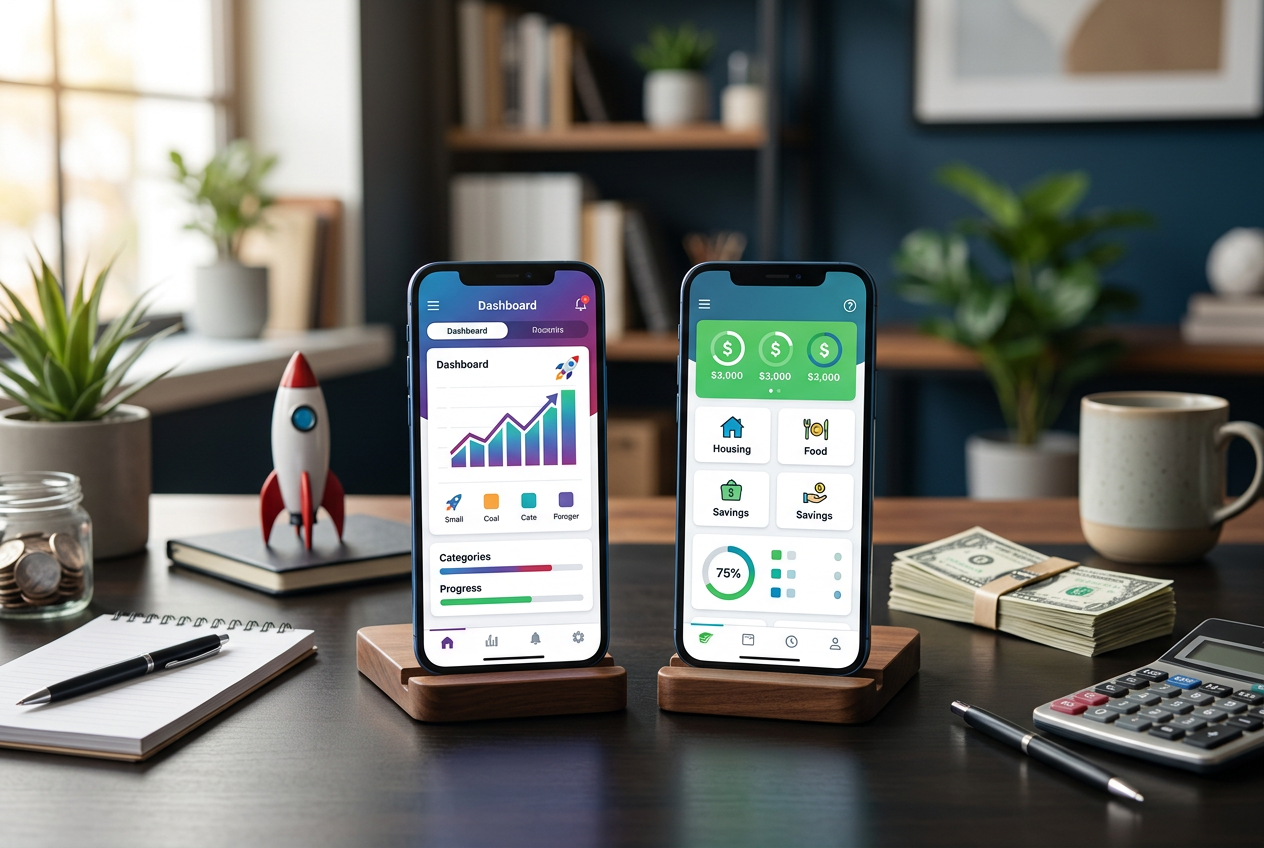
EveryDollar’s interface is intentionally simple. You see your budget categories, your spending, and how much remains. No fancy graphs, no AI predictions, no gamification. The core experience remains stripped-down and focused.
Rocket Money’s dashboard feels more like a financial command center. You get spending breakdowns, subscription tracking, net worth calculations, and bill monitoring all in one view.
Neither approach is wrong. EveryDollar assumes you want to be deeply engaged with every financial decision. Rocket Money assumes you want visibility without constant involvement.
Best Personal Finance Apps for Automated Savings Strategies
For entrepreneurs building passive income streams, the automation question becomes critical. You probably don’t have time to manually categorize every transaction when you’re also managing product launches, client work, and content creation.
Rocket Money is ideal for people who want automation and visibility and want to kill subscriptions without effort. The automated savings features let you set rules and move money with less manual effort.
EveryDollar Premium offers bank syncing but lacks the same automation emphasis. The philosophy is different: you should decide where money goes, not an algorithm.
Cost Analysis: Rocket Money Paid Features vs. EveryDollar Premium
Let’s talk actual numbers, because this is where many comparison articles get vague.
EveryDollar Premium runs $17.99 monthly or $79.99 annually. That annual plan works out to roughly $6.67 per month when averaged across the year.
Rocket Money Premium uses a variable pricing model. Its official help materials say you choose what to pay on a sliding scale, while Rocket Money’s pricing explainer says the typical range is generally around $7 to $14 per month, though that can vary over time and across platforms.
Here’s the real cost calculation though. If Rocket Money saves you money through subscription cleanup or bill negotiation, the effective cost can be offset quickly. If EveryDollar helps you become more intentional and actually follow a plan, the long-term behavior change may be worth far more than the subscription price.
The winner depends entirely on your situation. Subscription-heavy lifestyle with bills you’ve never negotiated? Rocket Money probably delivers more value. Need structured accountability to stop overspending in specific categories? EveryDollar’s approach might save you more.
The Final Verdict: Choosing Your Financial Path in 2026
Both apps work. Both have helped real people save real money. The question isn’t which is better overall but which matches your specific needs right now.
Choose EveryDollar if you want to build budgeting discipline from scratch, prefer the Dave Ramsey methodology, or need structured accountability for your spending. The manual approach teaches habits that stick.
Choose Rocket Money if you want technology to handle the tedious work, have multiple subscriptions you’ve lost track of, or hate negotiating with service providers. The automation frees up mental energy for other priorities.
At Beelinger, we believe the best personal finance apps for automated savings in 2026 are the ones you’ll actually use consistently. A perfect app you abandon after two weeks helps nobody.
Start with whichever approach resonates with how your brain works. You can always switch later once your financial situation evolves. The most important step isn’t choosing the right app: it’s choosing to start at all.
This article was created with AI assistance, reviewed by our editorial team, and fact-checked for accuracy.
Want a budgeting app that actually fits your life?
Compare more options, find lower-friction tools, and pick the app that helps you save, track, and stay consistent without overwhelm.
FAQ
Is Rocket Money or EveryDollar better for beginners?
It depends on how you learn. EveryDollar is often better for beginners who need structure and want to understand zero-based budgeting. Rocket Money is often better for beginners who want visibility and automation with less manual work.
Does EveryDollar have a free version?
Yes. EveryDollar has a free version, but manual transaction entry is part of the trade-off. Premium adds bank syncing and other features.
How much does EveryDollar Premium cost in 2026?
As of March 2026, Ramsey Solutions lists EveryDollar Premium at $17.99 per month or $79.99 per year.
How much does Rocket Money Premium cost in 2026?
Rocket Money uses a variable pricing model. Its official materials say users choose what to pay on a sliding scale, and Rocket Money’s pricing explainer says the typical range is generally around $7 to $14 per month, though this can vary.
Which app is better for subscriptions and bill negotiation?
Rocket Money is the stronger fit if your main goal is subscription management, bill negotiation, and automated monitoring. EveryDollar is more focused on budgeting discipline than concierge-style savings tools.
Sources
More from Beelinger
-
budgeting 5 Ways to Make It Without a Steady Paycheck
5 Ways to Make an Irregular Income Feel More Predictable Variable income does not have to mean a…
-
budgeting 5 Ways to Strengthen Your Financial Foundation
5 Ways to Strengthen Your Financial Foundation—and Put Better Money Habits on Autopilot Build a stronger emergency fund,…
-
budgeting Why do most people fail at budgeting
Why Most Budgets Fail and How Modern Technology Fixes Them Build a budget you can actually sustain by…
-
budgeting Rocket Money vs. Beelinger Budget: Which Money App Fits You Better?
Rocket Money vs. Beelinger Budget: Which Money App Fits You Better? Compare Rocket Money’s automated financial dashboard with…