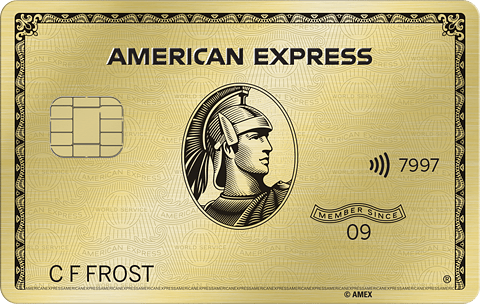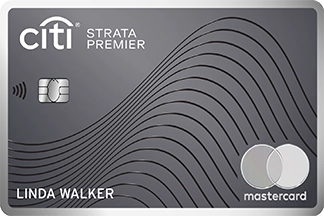
If you want airline miles, start with the card that matches how you actually fly. Some cards earn flexible points that transfer to multiple airlines. Others earn miles with one airline and give you perks like free checked bags, priority boarding, or Companion Pass progress. The best choice depends on whether you value flexibility, airline loyalty, low fees, or premium travel perks.
But not all airline miles cards are created equal. The wrong card can cost you hundreds in annual fees, lock your miles into a program you rarely use, or bury you in fine print that makes redemptions nearly impossible. That's the trap most guides don't talk about.
This guide cuts through it. We analyzed the top cards across four dimensions — earn rate, annual fee value, flexibility, and perks that actually matter to busy professionals who travel — and came back with eight cards worth your attention in 2026.
What This Guide Helps You Avoid
Use this guide to avoid three common travel-card mistakes:
- Paying for credits that force you to change your habits.
- Choosing a no-fee card that earns too slowly to get you a useful flight.
- Locking yourself into one airline when flexible points would give you better booking options.
One more thing before the rankings: the best airline miles card for you depends on whether you're loyal to one airline or prefer flying whoever is cheapest or best on a given route. We cover both types below — and we'll tell you which category you probably fall into.

"The smartest starting point in travel rewards — and still hard to beat at its price point."
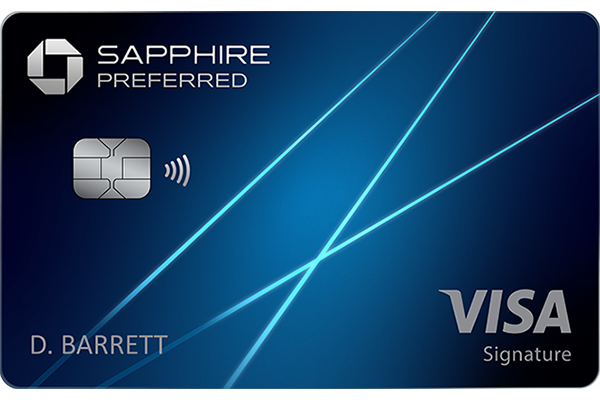
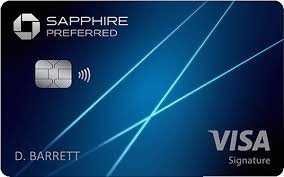
The Chase Sapphire Preferred earns 5x points on Chase Travel, 3x on dining, 3x on select streaming, and 2x on all other travel. But the real reason it tops this list for new travelers isn't the earn rate — it's the transfer partners. Your points move 1:1 to United, Southwest, Air France/KLM, Singapore Airlines, British Airways, and others. That flexibility is how you find award availability when your preferred airline's own card shows nothing. Chase Sapphire Reserve® is the best premium airline miles credit card for frequent flyers who use credits to get Free Flight Upgrades.
The $95 annual fee can be offset if you use the annual Chase Travel hotel credit. Chase's current issuer page lists a limited-time 100,000-point welcome offer after the required spend. Because welcome offers change quickly, treat the bonus as a live offer to verify before applying.
✓ Pros
- Move your points to multiple airline and hotel programs, so you are not stuck with one airline when award seats are limited
- Your points can stretch further when booking through Chase Travel, which may reduce the cash cost of a trip
- Annual Chase Travel hotel credit can offset the fee if you use it
- No foreign transaction fees
- Primary rental car insurance
- Low fee for what you get
✕ Cons
- Best value requires using Chase Travel portal
- 5x only on Chase Travel bookings, not all flights
- No lounge access at $95
- Can't hold two Sapphire cards at once
Best starter travel card in 2026. The math is clean for many travelers: $95 fee, an annual Chase Travel hotel credit, and a limited-time 100K-point offer if you meet the required spend. If you fly at least once a year and eat at restaurants, this card earns its keep. The transfer partners give you flexibility that most airline-specific cards can't match. Upgrade to the Reserve when you're spending enough to justify the premium.
Last checked against issuer terms: June 28, 2026. Opens Chase's secure application. Rates and terms may change.

"If you actually travel, this card's annual credits make the $795 fee look like a discount."
The Reserve's $795 annual fee sounds intimidating until you add up the credits: $300 travel credit (automatically applied to the first travel purchases), $300 dining credit, $500 for The Edit hotel stays, $120 DashPass, $300 DoorDash credit, $300 StubHub credit, $250 Apple TV+, $120 Lyft, $120 Peloton credit. If you use even half of these on things you'd buy anyway, the card pays for itself multiple times over.
The earn rate is equally strong: 8x on Chase Travel bookings, 4x on direct flights. Points transfer to the same 14 partners as the Preferred — but now your points are worth 50% more through Chase Travel (vs 25% on Preferred). Lounge access includes Chase Sapphire Lounges and Priority Pass.
✓ Pros
- The automatic $300 travel credit lowers the real fee if you already spend at least $300 a year on travel
- 8x on Chase Travel — among the highest on the market
- Priority Pass + Chase Lounge access
- Points 50% more valuable in Chase Travel portal
- Same 14 transfer partners as Preferred
- Primary rental car insurance up to $75K
✕ Cons
- $795 fee requires real commitment to use credits
- Must track and use multiple credits to break even
- Only one Sapphire card allowed at a time
- Some credits (Peloton, lululemon) irrelevant to many
Worth it for 4+ flights a year, but do the math first. The fee only makes sense if you actually claim credits. The $300 travel credit is automatic, but the DoorDash, StubHub, and lifestyle credits require enrollment. If you'd spend those dollars anyway, the effective annual fee drops well below $200. If you wouldn't, stick with the Preferred.
Last checked against issuer terms: June 28, 2026. Opens Chase's secure application. Rates and terms may change.

"Premium travel card features, $400 less per year than the competition."
The Venture X charges $395/year but gives you a $300 Capital One Travel credit and 10,000 anniversary miles every year. If you use the full travel credit and value the anniversary miles at roughly $100, the effective cost can land near $0 before everyday spending rewards.
The 2x on everything is underrated for people with varied spending. Groceries, subscriptions, bills, business purchases, and everyday expenses can all earn double. Miles transfer to 15+ airline partners including Air Canada, Avianca, British Airways, Turkish Airlines, and Wyndham. Capital One Lounges are still small but growing, and Priority Pass adds 1,300+ locations worldwide.
✓ Pros
- Effective annual cost can be near $0 if you use the travel credit and anniversary miles
- Earn steady travel rewards on groceries, bills, subscriptions, and other purchases without tracking bonus categories
- 10,000 anniversary miles every year
- 15+ transfer partners for flexible redemptions
- Priority Pass + Capital One Lounge access
- No foreign transaction fees
✕ Cons
- $300 credit only works through Capital One Travel
- Capital One Lounges are limited to a few airports
- Transfer partners skew international (less useful for domestic flyers)
- Less useful for US domestic-only travelers
The most underrated premium card in 2026. When the math works out to a near-$0 effective annual cost with lounge access and transfer partners included, this is hard to beat. Especially strong for readers who want one card that earns well on everything — not just travel categories.
Last checked against issuer terms: June 28, 2026. Opens Capital One's secure application. Rates and terms may change.

"United's flagship co-branded card earns hard on the airline you're already flying."
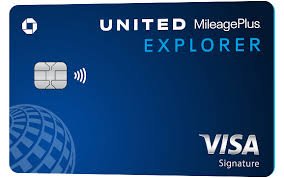
If United is your primary airline, the Explorer Card has the perks that make flying actually feel worth it: free first checked bag (saves up to $35/flight each way), 2 annual United Club one-time passes, priority boarding, and $500+ in annual partner credits. The 80,000-mile sign-up bonus is a standout — that's enough for multiple domestic round trips or a solid start on an international itinerary.
The first year is free, so the real decision is whether the ongoing value at $150/year pencils out. A single round trip where you check a bag saves you $140. If you fly United more than twice a year, the math typically works.
✓ Pros
- Free first bag saves $35–$70 per round trip
- 2 United Club passes per year
- 80K bonus miles — strong intro offer
- PQP (Premier qualifying points) from spending
- No foreign transaction fees
- First year free
✕ Cons
- Your rewards only work inside United’s program, so this is risky if you often choose the cheapest airline
- $150 annual fee after year one
- Value drops if you stop flying United
- Club passes are one-time only, not membership
Best-in-class if you fly United 2+ times per year. The free bag perk alone nearly covers the annual fee. But this card only makes sense if you're committed to United — if you spread flights across carriers, a flexible card like the Sapphire Preferred or Venture X will serve you better.
Last checked against issuer terms: June 28, 2026. Opens Chase's secure application. Rates and terms may change.

"Delta's everyday card hits the right balance of perks and price for regular Delta flyers."
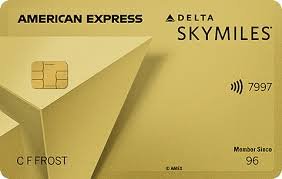
The Delta Gold is the entry point for SkyMiles loyalists who want real perks without the $350+ premium card fees. The first checked bag perk applies to you and up to 8 companions — so a family of four saves $140 every time you fly Delta. Priority boarding is included, and eligible card members can use TakeOff 15 to save 15% on eligible Delta award travel booked through Delta, subject to exclusions and terms.
The 2x on dining and U.S. supermarkets makes this card earn reasonably well for everyday spend — not just flights. Terms apply; see Delta and American Express for current details.
✓ Pros
- Free checked bag for you + 8 companions
- 2x on dining and U.S. supermarkets
- TakeOff 15 on eligible Delta award travel
- First year free
- TakeOff 15 can discount eligible Delta award travel
- No foreign transaction fees
✕ Cons
- Miles tied to Delta SkyMiles only
- $100 credit requires $10K annual spend
- No lounge access at this tier
- 1x base rate is weak for non-Delta spend
Solid mid-tier pick for Delta regulars. The bag fee savings are real and meaningful. But if you're earning miles for aspirational travel (business class internationally, premium seats), Delta's SkyMiles devaluation history gives us pause — consider pairing with a flexible points card for better award flexibility.
Last checked against issuer terms: June 28, 2026. Opens American Express' secure application. Terms apply. See rates and fees.

"The best card for Companion Pass chasers — and Southwest loyalists who fly domestic often."
Southwest Rapid Rewards points are unique because they're priced in points per dollar, not award zones — so there are no blackout dates and no seat restrictions. Every seat on every Southwest flight is bookable with points. The Priority card adds a $75 annual travel credit, 7,500 anniversary points worth ~$105, and 4 upgraded boardings per year.
The bigger story here is the Companion Pass. Earn 135,000 Rapid Rewards points in a calendar year and your companion flies free on every Southwest flight you take for the rest of that year and all of the next. Smart strategy: open a Southwest personal card in January, collect the bonus, and you have a companion flying free for nearly two full years.
✓ Pros
- Path to Companion Pass worth $1,000+ in travel
- No blackout dates — all seats bookable with points
- $75 travel credit reduces effective fee to $154
- 7,500 anniversary points worth ~$105
- 4 upgraded boardings per year
✕ Cons
- Only useful for Southwest flyers
- Points limited to Rapid Rewards — no transfers
- $229 fee higher than most airline mid-tier cards
- No international airline value
High upside for domestic travelers who live near a Southwest hub. The Companion Pass strategy is one of the clearest examples of credit card rewards creating real, measurable financial freedom. If you travel with a partner 4+ times a year on Southwest, this card can easily deliver $1,500+ in annual value.
Last checked against issuer terms: June 28, 2026. Opens Chase's secure application. Rates and terms may change.
Best No-Annual-Fee Airline Miles Cards
Why a $0 Airline Card Can Still Be Expensive
A $0 fee lowers risk, but slow earning can delay your next useful award flight. That is useful. But they often create an invisible cost: slower earning velocity. If most of your spending earns only 1x airline miles, you may lose more in missed flexible points than you save in annual fees.
Use no-fee airline cards as secondary cards, downgrade destinations, or low-risk ways to keep a mileage account active. Do not make them your main daily spender unless the airline, bonus categories, and benefits clearly fit your travel pattern.
These two cards still have a role. They are smart starting points if you want to test an airline's loyalty program before committing to a paid card, but they should not replace a stronger flexible-points card for most everyday spending.

"No fee, real United miles, and a strong sign-up bonus for a $0 card."
The United Gateway earns 5x miles on United flights, 2x at gas stations, and 2x on local transit. For a card with no annual fee, those rates are genuinely competitive. The 40,000-mile bonus (after $1,000 spend in 3 months) is enough for 2 domestic round trips. There's also a 0% intro APR for 12 months on purchases — useful if you're managing a large business or travel expense upfront.
After $10,000 in calendar year spend, you earn 2 checked bags and a 10% discount on miles bookings. The card grows with your spending habits without ever charging you for the privilege.
✓ Pros
- $0 annual fee — risk-free to keep forever
- 5x on United flights — strong airline earn rate
- 40K bonus miles for only $1,000 spend
- 0% intro APR for 12 months
- No foreign transaction fees
✕ Cons
- No free bag (requires $10K spend to unlock)
- No lounge access
- Miles limited to United MileagePlus
- 1x on most non-United spend
The best no-fee airline card if you fly United occasionally. Keep it even after upgrading to a paid United card — it adds MileagePlus earning on everyday spend without any cost. The 40K bonus for $1K spend is one of the better no-fee offers available right now.
Last checked against issuer terms: June 28, 2026. Offers and terms may change.

"Delta miles with zero annual fee — best for occasional Delta flyers who don't want to commit."
The Delta SkyMiles Blue Amex earns 2x miles on Delta purchases and at restaurants — two categories that matter. No annual fee means there's no hurdle to clear and no fee to justify. The 20% discount on in-flight Delta purchases (food, beverages, Wi-Fi) is a small but real perk.
This card is best positioned as a companion to a general travel card — keep it to accumulate Delta miles passively while earning better rates on everything else with your primary card. Terms apply.
✓ Pros
- $0 annual fee — no commitment required
- 2x on Delta and restaurants
- 20% back on Delta in-flight purchases
- No foreign transaction fees
✕ Cons
- No free checked bag
- No sign-up bonus on many offers
- 1x on most spending categories
- No status perks or lounge access
Fine as a secondary card, not as your primary. The $0 fee is the main selling point. If you fly Delta 1–2 times a year and want miles accumulating in the background, keep it open. But for your main travel card, you need something with better earn rates and actual perks.
Last checked against issuer terms: June 28, 2026. Offers and terms may change.
Use the Table to Narrow Your Shortlist
The top comparison table is built for quick decisions. Use it to narrow your options by airline habits, annual fee comfort, and preferred redemption style, then read the detailed review before you apply.
Find the Card That Fits Your Flights
The biggest mistake people make when picking an airline card is starting with the card instead of starting with their habits. Start with how you actually fly, then choose the card that saves money or earns useful rewards without pushing you into fees you do not need.
Step 1: Are you loyal to one airline, or do you fly whoever?
If you fly the same airline 80%+ of the time, a co-branded card (United, Delta, Southwest) makes sense — you'll collect miles in a program you can actually redeem. If you split across carriers, a flexible card like the Sapphire Preferred or Venture X is almost always better because you can transfer to whichever partner has availability when you're ready to book.
Step 2: How many flights per year?
1–2 flights/year: No-fee card or Sapphire Preferred. 3–6 flights/year: Sapphire Preferred, United Explorer, or Delta Gold. 7+ flights/year: Sapphire Reserve, Venture X, or United Quest. The premium cards only make sense when you're flying enough to claim all the credits.
Step 3: Do the annual fee math before you apply
Take the annual fee. Subtract every credit you'd actually use (not "might use" — credits you would definitely use). What's left is your real annual cost. If that number is less than the value of the perks you use (lounge access, free bags, bonus miles), the card earns its keep.
"The best airline miles credit card isn't the one with the most perks — it's the one you'll actually use every perk on, every year, without having to change your behavior to justify it."
— Beelinger Editorial
Why Flexible Points Can Get You More Flight Options
Flexible points are powerful because they let you shop across programs. In some cases, the same airline seat can cost far fewer points when booked through a partner program instead of the airline's own program.
Option 1: Earn Miles With One Airline
- You use miles from a card tied to one airline.
- You are locked into that airline's award pricing.
- A last-minute domestic flight may price at 35,000 miles or more.
Option 2: Keep Your Points Flexible
- You move flexible points to a partner program when award space appears.
- You may book the same partner-operated flight for fewer points.
- The value comes from optionality, not loyalty.
Award pricing changes often. This example explains the strategy, not a guaranteed redemption price.
Flexible Points vs. Airline Miles: What's the Real Difference?
When you earn Chase Ultimate Rewards or Capital One Miles, you earn flexible points — they're like a currency that can convert into airline miles, hotel points, or cash back. When you earn United MileagePlus or Delta SkyMiles directly, those are already airline miles locked into that program.
The risk with airline-specific miles: Airlines devalue their programs. Delta, United, and American have all made award flights more expensive in points terms over the past decade. When you hold flexible points, you can simply redirect them to a program with better rates at the time of booking. That optionality has real value — especially for the type of long-term thinking that financial freedom requires.
The Companion Pass Strategy (Southwest-Specific)
This is one of the highest-ROI moves in credit card rewards and it flies under the radar. Here's how it works: earn 135,000 Southwest Rapid Rewards points in one calendar year and you get Companion Pass status — meaning one designated person flies free with you on every Southwest flight for the rest of that year and all of the next. That can be 18+ months of two-for-one flights.
The strategy: open the Southwest Performance Business card in January, hit the bonus, then open a personal Southwest card (Plus, Premier, or Priority) about 30 days later and hit that bonus. Sign-up bonuses count toward Companion Pass qualification. Done right, you can hit 135,000 points in your first 3 months of card ownership — without it all coming from spending.
How We Judge Whether a Card Is Actually Worth It
Most airline credit card lists focus on headline bonuses. We look at whether a normal reader can earn useful travel rewards, avoid wasted fees, and choose points or miles they can realistically redeem.
Frequently Asked Questions
Verify the Latest Fees, Bonuses, and Terms
Last offer check: June 28, 2026. Credit card offers, annual fees, APRs, statement credits, transfer partners, and welcome bonuses change often. Before applying, verify details directly with the issuer.