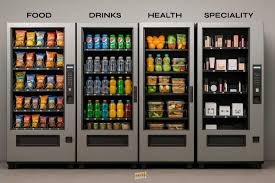
Key Takeaways
Starting a vending machine business in 2026 offers a realistic path to passive income with strategic planning and execution. Here are the essential insights for building a profitable operation:
• Start small with $4,000-$10,000 investment – Single machine operations are accessible, with refurbished equipment costing 40-60% less than new machines
• Location determines 80% of your success – High-traffic areas like hospitals, offices with 100+ employees, and gyms generate $150-$400 monthly per machine
• Cashless payments boost revenue by 35% – Modern payment systems are essential as 77% of transactions are now contactless in 2026
• Scale systematically for passive income – Start with one machine, master operations, then expand to 30+ machines for substantial automated revenue streams
• Choose profitable niches and products – Healthy snacks offer 25% higher margins, while specialty items like tech accessories command premium prices
The vending industry’s growth from $38 billion to $63 billion by 2027 creates significant opportunities for new entrepreneurs. Success requires combining strategic location selection, smart product offerings, and efficient operations to build a business that generates income around the clock.  The vending machine business has grown into a $42 billion industry that’s changing faster by blending convenience with state-of-the-art technology.
Starting in this growing market doesn’t need a huge investment. A single-machine operation costs between $4,000 and $10,000 to start . Machine prices vary by type. You can get snack vending machines for $2,000-$3,500, while beverage machines cost $3,000-$5,000 .
Money-making potential looks promising in this business. Each machine brings in $5 to $100 weekly , based on where you place it and what you sell. The market should expand from $38 billion in 2022 to over $63 billion by 2027 . This growth creates many opportunities for new entrepreneurs.
You need a solid business plan to succeed. Your vending machine business’s success depends on finding good spots, picking popular products within your budget, and learning the basics of running vending operations . This piece shows you how to build a reliable passive income stream from scratch with vending machines.
Understanding the Vending Machine Business Model
Image Source: T-ROC
The vending machine industry runs on a simple yet powerful business model that combines automation with smart decision-making. You can turn a basic machine investment into a steady income stream by learning the basics.
What Makes Vending Machines Profitable
Location quality makes or breaks profitability in the vending industry. Machines in busy areas with regular customers generate much more revenue than those in quiet spots [1]. The core team places these machines in offices, hospitals, schools, universities, and gyms to ensure steady customer traffic [1].
Your product mix directly affects your profits. The right combination of popular items and premium options can boost your sales. To cite an instance, energy drinks and specialty beverages give you 75-85% gross margins, while healthy snacks are 25% more profitable than regular options [2].
New payment technology is a big deal as it means higher revenue. Adding cashless payment systems can boost your sales up to 35% in just 18 months [3]. By 2025, 71% of vending transactions were cashless, and 77% of these were contactless payments [4].
Industry Trends in 2026
The vending industry looks different in 2026. AI-powered analytics help machines study buying patterns, predict what customers need, and stock up smartly [5]. This helps maximize profits and cut down waste.
Health-conscious customers are asking for nutritious options more than ever. Keto snacks, protein-rich meals, and fresh drinks are popular, especially in universities, gyms, and offices [5].
Micro markets are becoming the new thing in offices and apartment buildings. These spaces mix open-shelf products with vending machines, letting operators adjust their offerings based on seasons and what locals want [5].
IoT technology has revolutionized how we manage these machines. Up-to-the-minute data analysis of temperature, sales, and maintenance needs helps keep machines running smoothly [5][6].
Types of Vending Machine Businesses
The vending industry includes several business models:
Traditional snack and beverage machines – These are still the industry’s foundation, selling reliable products people always need
Specialty vending – These machines sell items like phone accessories, electronics, or cotton candy at premium prices
Fresh food vending – You can sell salads, sandwiches, or even hot meals from pizza to burgers
Bulk vending – This involves selling candy, toys, or small items with a small investment (usually $150-$450 per machine) [7]
Coffee machines are another profitable option. Customers happily pay $1.50-$3.00 for quality drinks [7].
Revenue Expectations and Income Potential
Each machine typically brings in $150 to $400 monthly, depending on foot traffic, product mix, and location quality [8]. After paying for inventory, location fees, and upkeep, you can expect to keep 25% to 35% as profit [8].
Your income grows as you add more machines. Five machines might earn you $250-$500 monthly, while 50+ machines could bring in $3,000-$6,000+ monthly [8].
Results vary based on several factors. The best machines in prime spots with the right products can earn way above average. Specialty vending machines in strategic locations often see profit margins of 60-90% [2].
How Much Does It Cost to Start a Vending Machine Business
You need solid financial planning and a good grasp of costs to start a vending machine business. The expenses go way beyond just buying machines. A clear picture of these costs helps you make a realistic budget and keeps you from getting caught off guard financially.
Breaking Down Vending Machine Startup Cost
A single vending machine operation needs $4,000 to $10,000 to get started [9]. The costs break down into several parts beyond the machine itself.
Your biggest expense will be the vending machine. A new full-size machine costs $3,000 to $10,000 based on its features and tech [10]. You can save money by getting a refurbished machine that costs $1,200 to $3,000 [10]. This is great for first-time operators.
Standard machines need $150-$200 for your first stock [1]. Specialty items might cost more. Here are other costs you’ll face when starting:
Business registration and permits ($50-$400) [1]
Delivery and installation ($200-$500) [11]
Payment systems – card readers cost $200-$300 per machine but boost sales by 30% [11]
Financing Options for $0 Down Payment
Don’t have startup money? You can still launch your business with little upfront cash through several options:
Equipment financing lets you use the machines as collateral. This often means lower interest rates [1]. The option works best when you’re buying several machines at once.
Manufacturers and distributors offer seller financing with flexible terms. This helps new businesses without much credit history. Many vending companies have their own financing programs with payment plans that fit your needs [12]. Some even let you skip payments for the first few months or stretch them out longer [7].
Business credit cards work well for buying single machines since their limits usually cover the cost [9]. Larger operations might want short-term business loans. These have higher interest rates but easier qualification requirements [10].
Used vs New Equipment Investment
Your choice between new and used machines shapes both your starting costs and long-term profits.
New machines ($3,000-$10,000) come with warranties and modern features. They break down less often and have the latest payment tech. Their energy-efficient parts help cut running costs over time [5].
Used/refurbished machines ($1,200-$3,000) cost 40-60% less than new ones [9]. They’re perfect for testing locations or business ideas without risking too much. Many first-timers start with these machines while learning the ropes.
Used machines might need more repairs and won’t have warranty protection [5]. Make sure you test everything and check vital parts like the coin mechanism and cooling system before buying [4].
Hidden Costs Most Beginners Miss
Some costs aren’t obvious at first but can really affect your profits:
Property owners charge location commissions of 5-25% of your gross sales [9] [6]. These regular payments cut into your earnings, especially in high-traffic spots.
Each machine needs about $200-$500 yearly for maintenance and repairs [6]. Keep $300-$500 set aside for emergency fixes to avoid cash flow problems [11].
Card transaction fees run 2-3% per sale [6]. These add up fast as more people use cards. Your costs will also go up with each restocking trip as you add more machines in different locations.
Product spoilage and changing seasons affect your inventory costs. New operators often don’t account for these expenses and end up with unrealistic profit estimates.
Creating Your Vending Machine Business Plan
Your vending machine business plan works as a roadmap that helps you direct your way through industry complexities and get funding. Your original focus should be clear business goals and target market identification.
Choosing Your Niche and Products
The right niche choice directly affects how profitable your business becomes. The healthy snacks market keeps growing and gives higher profit margins than traditional snacks—approximately 25% more profitable [13]. Tech accessories and eco-friendly products are other profitable niches that draw environmentally conscious consumers [14].
Your products need to match your locations. To cite an instance, fitness centers work great for protein bars and sports drinks that cater to gym-goers who want quick nutritional options [15]. Here’s what matters when picking products:
Affordability: Pick items with reasonable wholesale prices that still make you money
Product recognition: People buy familiar brands more from vending machines
Nutritional value: People who care about health want better options than traditional snacks [16]
Legal Requirements and Permits
You need several permits and licenses before you launch:
Business License: Almost every state needs this as basic legal recognition [17]
Sales Tax Permit: You need this to collect and send sales tax when selling tangible personal property [18]
Health Permit: You must have this to sell food and drinks, and it often needs inspections [17]
Vending Machine Permit: Costs vary by a lot—Wisconsin asks for $125 plus $9 per machine, while Los Angeles wants $71 plus $26 for each extra machine [19]
New operators should reach out to their local Chamber of Commerce or Small Business Association to learn location-specific rules [7]. The Association of Food and Drug Officials also gives resources about FDA regulations [7].
Setting Up Your Business Structure
Your legal structure choice affects your taxes, liability protection, and how much you can grow:
Sole Proprietorship: Easy to set up but doesn’t protect your personal assets
Partnership: Works well for shared ownership but puts personal assets at risk
LLC (Limited Liability Company): Many think this works best for vending businesses because it protects personal assets while keeping tax flexibility [20]
Corporation: Gives strong liability protection but needs more paperwork [20]
An LLC hits the sweet spot between protection and simplicity for most small to mid-sized operators [20]. It keeps your personal assets safe from business problems and gives tax perks like equipment depreciation deductions [21].
Your formal business plan should include all these elements along with financial projections and marketing strategies to create a detailed path forward for your vending machine business.
Finding and Securing Profitable Locations
The life-blood of a successful vending machine business lies in finding premium locations. Your venture’s success depends on proper placement that affects profitability.
Where to Place Your First Machine
Your machine’s performance directly depends on its location. Smart operators target areas with steady foot traffic and captive audiences rather than picking random spots. Prime locations include:
Hospitals and healthcare facilities (24/7 operation, three distinct buyer types)
Manufacturing facilities and industrial parks (multiple shifts, limited break time)
Schools and universities (busy schedules, consistent traffic)
Gyms and fitness centers (health-conscious demographic)
Office buildings with 100+ employees (regular breaks, captive audience) [22]
Location assessment should include visibility, accessibility, and security. Machines placed in well-lit areas with regular supervision face lower risks of theft or vandalism [8].
Negotiating Placement Agreements
Property owners respond better when you focus on their benefits rather than yours. A clear pitch should show how your machine adds value to their space by providing convenience for customers/employees or creating an extra amenity [3].
A 3-6 month trial period helps reduce risk perception [23]. Both parties get time to assess the partnership without committing long-term.
Building Relationships with Property Owners
Trust grows through consistent communication during your partnership. Property owners appreciate transparency about machine performance, quick responses to concerns, and reliable maintenance [3].
Your service should run smoothly with minimal effort from location owners while delivering maximum benefit [24]. This approach leads to steadfast dedication and potential referrals to other locations.
Commission Structures and Revenue Sharing
Commission rates typically range from 5% to 25% of monthly revenue [25]. Location quality determines these percentages:
High-traffic areas like malls or airports: 15-25%
Offices and corporate settings: 10-20%
Schools and educational institutions: 15-30% [26]
The location’s stability helps decide between percentage-based commissions or fixed monthly payments [27]. Commission payments work best when presented as win-win arrangements where both parties benefit from the machine’s success [28].
Operations, Maintenance, and Scaling Your Business
Success in the vending machine business comes from mastering daily operations before you scale up to reach your passive income goals. Good management systems build the foundation for steady growth.
Restocking and Inventory Management
Smart inventory management stops you from losing sales and wasting products. The “first in, first out” method works best—older products go in front to stay fresh and reduce expired items [2]. You can make use of inventory tracking software to watch stock levels as they change and get alerts when products run low [29]. Product maps for each machine help track specific items across locations to make your product mix better [29].
Daily Maintenance Routines
Your machines need regular upkeep to avoid breakdowns that can get pricey and shut down operations for days [30]. A steady schedule works best: clean the outside daily, inside parts weekly, and cooling systems every three months [2]. The payment systems and product delivery parts need frequent checks since they cause most problems [2]. A detailed maintenance log for each machine helps you spot patterns and know when parts might fail [2].
Tracking Sales and Profitability
New tracking systems give you useful business insights. Monthly gross revenue per machine usually ranges from $150 to $400, with profits between 25-35% [1]. The right software helps track machine sales, watch inventory movement, and plan better restocking routes [1]. This informed approach spots machines that underperform, products in high demand, and where profits might leak [1].
The Right Time to Expand Your Fleet
Your first machine should show steady profits before expansion. Running 5-10 machines lets you see how different product mixes, restocking schedules, and locations affect performance [1]. A fleet of 15+ machines can bring in good part-time money [1]. Larger operations with 30+ machines turn into logistics businesses that might need warehouse space and staff [1].
Automating Your Vending Business for Passive Income
Automation tools pave the way to passive income. Remote monitoring gives you up-to-the-minute data about how your machines run and perform [11]. Smart inventory systems and cashless payments blend simplicity with state-of-the-art technology to help achieve financial freedom [31]. Our detailed passive income guide offers more strategies to boost your earnings.
Conclusion
A vending machine business can pave your way to financial freedom without huge upfront costs. This $42 billion industry is growing faster than ever and will reach $63 billion by 2027. You can start with just $4,000-$10,000, making it a great business option for entrepreneurs at different financial levels.
Your success depends on three main factors. High-traffic spots with regular customers will boost your revenue potential. The right product mix based on local demographics drives maximum sales. A solid grasp of operations helps avoid costly mistakes that eat into profits.
Technology has changed this once simple cash-based business. Sales jump up to 35% with cashless payment systems. IoT connectivity lets you track inventory, maintenance, and sales patterns remotely. These tech advances make it easier than ever to grow your business.
The legal side is simple but needs careful attention. An LLC structure gives you vital liability protection and keeps tax flexibility. You’ll also need the right permits and licenses to avoid legal issues later.
Building your vending machine empire takes time. Most people start with one machine and learn the ropes before expanding. The business shifts into a logistics operation once you cross 30 machines, creating substantial passive income.
Your side hustle can become your main income source with the right strategy. Smart locations, good product choices, and smooth operations create a business that makes money while you sleep. This mix of automation and smart decisions gives determined entrepreneurs a clear path to financial freedom – just stock those machines today for tomorrow’s profits.
FAQs
Q1. How much does it cost to start a vending machine business? The typical startup cost for a single-machine operation ranges from $4,000 to $10,000. This includes the cost of the machine, initial inventory, business registration, permits, insurance, and installation. New machines cost between $3,000 and $10,000, while refurbished machines range from $1,200 to $3,000.
Q2. What are the most profitable locations for vending machines? The most profitable locations for vending machines are typically high-traffic areas with captive audiences. These include hospitals, manufacturing facilities, schools and universities, gyms, and office buildings with 100+ employees. These locations offer consistent foot traffic and limited alternatives for snacks and beverages.
Q3. How much revenue can I expect from a single vending machine? Monthly gross revenue per machine typically ranges from $150 to $400, depending on factors such as location, product selection, and traffic. After accounting for expenses like inventory costs, location commissions, and maintenance, net profit generally falls between 25% and 35% of gross revenue.
Q4. What types of products should I offer in my vending machines? Product selection should align with your location and target audience. Healthy snacks, energy drinks, and specialty beverages often yield higher profit margins. For example, in fitness centers, protein bars and sports drinks are popular. It’s important to choose items that are affordable at wholesale prices while maintaining profitability and meeting customer demand.
Q5. How can I automate my vending machine business for passive income? To achieve passive income, utilize modern technology and automation tools. Implement remote monitoring solutions for real-time data on machine status and performance. Use smart inventory management systems and cashless payment options to streamline operations. As your business grows, consider hiring staff to handle restocking and maintenance, allowing you to focus on strategic decisions and expansion.
References
[1] – https://www.vendsoft.com/vending-machine-profit/
[2] – https://www.mefitvending.com/post/vending-machine-maintenance-tips-every-owner-should-know
[3] – https://dfyvending.com/negotiating-vending-machine-locations/
[4] – https://vendingmetrics.com/articles/pros-and-cons-of-used-vending-machines/
[5] – https://www.vitalvendingsales.com/blog/new-or-used-vending-machines-making-the-right-choice-for-your-business
[6] – https://widermatrix.com/vending-machine-cost-the-ultimate-2025-investment-guide/
[7] – https://www.forbes.com/advisor/business/start-a-vending-machine-business/
[8] – https://prestigeservicesinc.com/blog/best-places-to-put-vending-machines-in-your-business/
[9] – https://www.nav.com/blog/vending-machine-business-1864566/
[10] – https://www.nerdwallet.com/business/learn/how-to-start-a-vending-machine-business
[11] – https://blog.vendingworld.com/the-ultimate-guide-to-maintaining-vending-machines-for-efficiency-and-longevity
[12] – https://www.selectivend.com/100-percent-financing/
[13] – https://pyramidacceptors.com/news/top-profitable-niches-in-the-vending-machine-industry
[14] – https://vending-machines.ie/what-are-the-top-5-emerging-niches-in-vending/
[15] – https://naturals2go.com/benefits-niche-vending-markets/
[16] – https://naturals2go.com/guide-to-starting-vending-business/
[17] – https://pizzaforno.com/blog/permitting-a-vending-machine-united-states
[18] – https://gov.texas.gov/uploads/files/business/Texas_Licenses_Permits_Guide.pdf
[19] – https://www.corpnet.com/business-licenses/vending-machine-and-device-permit/
[20] – https://www.vendsoft.com/vending-machine-business-structures/
[21] – https://dfyvending.com/vending-machine-business-structures-tax/
[22] – https://www.bicomvending.com/where-to-place-a-vending-machine-the-25-best-locations-to-maximize-profit/
[23] – https://www.vendsoft.com/profitable-vending-machine-locations-guide/
[24] – https://casediymachine.com/blog/vending-machine-business-models/
[25] – https://dfyvending.com/vending-machine-commissions/
[26] – https://www.candymachines.com/blog/an-indepth-look-at-commission-the-benefits-of-paying-a-percentage-vs-a-set-amount/?srsltid=AfmBOorJiVvazGUjm4gnpm5HDxotq3EQkvW_LgSBHZ3KBL1_E2L7JZkr
[27] – https://www.metrowestvending.com/post/why-profit-sharing-is-a-win-win-in-vending
[28] – https://www.vendease.co.uk/a-win-win-approach-how-revenue-sharing-enhances-business-partnerships-in-vending-2/
[29] – https://www.nayax.com/blog/vending-machine-inventory-management/
[30] – https://www.mandpvending.net/blog/the-dos-and-donts-of-vending-machine-maintenance/
[31] – https://dfyvending.com/done-for-you-vending-business/