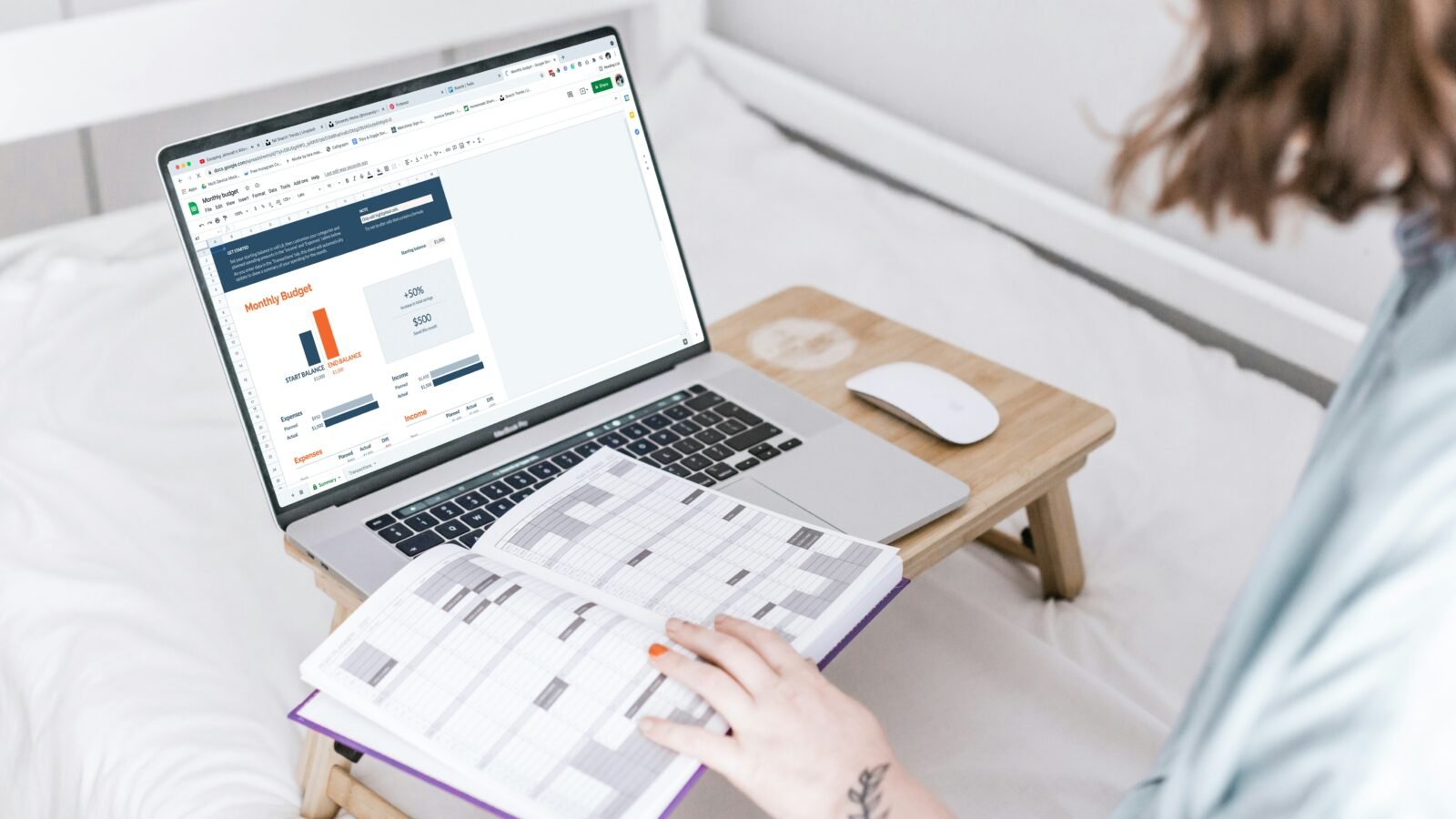
How to Make a Budget That Works in Real Life
A story-driven, step-by-step budgeting approach that builds a system you can stick with—through normal life, unexpected expenses, and income changes.
Educational Disclaimer: This article is for educational purposes and not financial advice.
Affiliate Disclosure: Some links may earn Beelinger a commission at no extra cost to you.
TL;DR
- Budgeting is a soft skill: Behavior and emotions matter as much as math.
- Start small to build trust: A tiny habit (like the $20 Rule) beats a perfect spreadsheet.
- Match the budget to your paycheck: “Budget by paycheck” reduces mid-month breakdowns.
- Use constraints where you overspend: Cash envelopes create a visible boundary.
- Build for stability and joy: A comfort fund and “joy jar” make your system sustainable.
How Sam Stopped “Failing” Budgets
For years, Sam believed they were simply “bad with money.” Every January, Sam would create a hyper-detailed, rigid spreadsheet, vowing to track every single penny.
And every February, after an unexpected expense or a moment of weakness, Sam would abandon the budget entirely. Sam was stuck in a cycle of restriction and splurging, treating their budget like a fad diet.
Sam’s turning point came when they realized that financial success is not a hard science, but a soft skill—where behavior and emotions matter more than math.
Shifting the Mindset and Starting Small
Sam decided to stop aiming for a “perfect” budget that assumed they would never slip up, and instead aimed for a “reasonable” budget that left breathing room for real life.
Sam also stopped looking at their friends’ new cars and vacations. They learned that comparison is the thief of money, leading to “lifestyle creep” where you slowly upgrade your spending just to match an image, draining your wealth.
To build confidence, Sam started incredibly small using the $20 Rule. which is generally refers to a simple, consistent savings strategy of setting aside $20 per week or paycheck, which can accumulate over $1,000 in a year. Other variations include the “20/20 Rule” for decluttering (replacing items for under $20 in under 20 mins) or the “$20 Vegas Trick” to get room upgrades.
To apply the $20 rule, Sam opened a brand new, separate online savings account. Every single time a paycheck hit their checking account, Sam automatically transferred exactly $20 into this new savings account.
Gamifying the process and watching the number slowly grow gave Sam a sense of superpower and created a new financial habit without heavily disrupting their daily life.
The Paycheck Budget
Next, Sam needed a system. Because Sam was paid twice a month, trying to force their money into a single monthly budget template always ended in frustration. Instead, Sam adopted the Budget by Paycheck method, which is a paycheck-to-paycheck budget is a zero-based, pay-period-specific plan where every dollar is assigned to expenses (needs, debts, savings) immediately upon receipt, ensuring the balance equals $0.
Key steps include mapping expenses to specific paydays, automating savings, reducing, and prioritizing, such as with the 70-20-10 rule (70% needs, 20% savings/debt, 10% wants).
To apply the the Budget by Paycheck method, Sam sat down with a blank calendar and wrote out all of their regular bills. Then, using highlighters, Sam color-coded which bills would be paid by the first paycheck and which would be covered by the second paycheck.
For variable expenses where Sam had a history of overspending—like groceries and dining out—Sam switched to the cash envelope method.
Sam withdrew physical cash for these categories and placed them in labeled envelopes. The visual boundary of seeing exactly how much cash was left naturally stopped Sam from overspending.
The Crisis and the Bare Bones Budget
Six months into this new routine, disaster struck. Sam’s hours at work were severely cut, and the very next day, their car needed a major repair. In the past, this would have caused a spiral of debt.
Thankfully, Sam had been building a “Comfort Fund.”
Rather than calling it an emergency fund—which implies you can only use it if catastrophe strikes—Sam viewed this money as a reserve to actively add comfort to life and weather surprises without feeling guilty. Sam used some of this fund for the car, but their reduced income meant they were still in the red.
Sam didn’t panic; they pivoted to a Bare Bones Budget.
Sam listed out every single expense and used the “keep, cut, or lower” method. Sam ruthlessly cut all subscriptions, dining out, and non-essentials, focusing solely on the “four walls”: keeping a roof over their head, keeping the lights on, and putting basic food on the table.
Even after cutting everything down to the absolute minimum, the math didn’t work. Sam realized they didn’t have a spending problem; they had an income problem. Knowing that monetizing an existing skill offers the fastest return on investment, Sam decided to act as their own employer and started a side hustle doing freelance video editing.
Automating and Budgeting for Joy
Eventually, Sam’s hours returned to normal, and their side hustle brought in extra cash. Sam decided to automate their finances to avoid decision fatigue. Now, whenever Sam got paid, the money was automatically deposited and split: a portion went to a spending account for fixed bills, and another portion went into tax-advantaged investment accounts to grow through compound interest.
But the most important change Sam made was creating a Joy Jar. Sam realized that the wealthy purposefully carve out room for guilt-free enjoyment, knowing that a budget without joy quickly feels like a punishment. Sam dedicated 10% to 20% of their income entirely to rewards—like weekend getaways, hobbies, and dinners with friends—buying memories that would last a lifetime.
Sam learned that budgeting was never about perfectly restricting themselves. It was about building a reliable system that provided ease, funded their future, and allowed them to truly trust themselves with their money.
Best Budgeting Apps That Can Help You
It depends on whether you prefer a “set and forget” automated approach or a “hands-on” method where you assign a job to every dollar.
- Monarch Money (Best Overall & Mint Alternative): A highly customizable, ad-free platform that tracks net worth, investments, and spending in one place. It is popular for couples because it allows collaborating on one dashboard.
- YNAB (You Need A Budget) (Best for Serious Budgeters): Uses a strict “zero-based” approach where every dollar is assigned a task. It is known for helping users break the “paycheck-to-paycheck” cycle by budgeting with money already in the bank.
- Rocket Money (Best for Lowering Bills): In addition to basic budgeting, it identifies and helps cancel unwanted subscriptions and can negotiate lower rates on bills like internet or cable.
- Empower (Best Free Option for Investors): Offers robust free tools for tracking your overall net worth, retirement accounts, and investment portfolios alongside daily spending.
- PocketGuard (Best for Preventing Overspending): Focuses on an “In My Pocket” feature, showing exactly how much spendable cash you have left after accounting for bills and goals.
Quick Comparison of Popular Budgeting Apps in 2026
Tip: If you want hands-on control, start with YNAB. If you want a clean dashboard with flexibility, start with Monarch.
Free Alternatives
If you prefer not to pay a subscription, Goodbudget offers a free tier for manual entry based on the envelope system. For a completely custom experience, many users still rely on Google Sheets or Excel templates. You can try Beelinger free Budget Template. This is a simple Tool to Help You Track Your Money. For more money apps, visit Beelinger tools for more money apps that can help build financial freedom.
Want your budget to feel easier (not stricter)?
Start by tracking what’s happening now—then build a system that fits your paychecks and real life.
Budgeting FAQs
What if I always quit my budget after a few weeks?
Build a “reasonable” budget with breathing room and a small win habit (like transferring a fixed $20). A budget that survives imperfect weeks beats a perfect plan you abandon.
Is budgeting by paycheck better than monthly budgeting?
If your bills and spending rhythm follow your paydays, budgeting by paycheck often feels more realistic—because it matches when money actually arrives and when bills actually hit.
Should I use a cash envelope method if I overspend?
If certain categories consistently run over (like dining out or groceries), cash envelopes create a visible boundary that makes overspending harder without requiring constant willpower.
What’s the difference between an emergency fund and a “comfort fund”?
The mechanics are the same (cash reserves). The “comfort fund” framing can reduce guilt and make it easier to use the money for real-life surprises without feeling like you failed.
Which budgeting app should I start with?
If you want hands-on control, start with YNAB. If you want a clean dashboard and flexibility (especially for couples), consider Monarch. If your goal is reducing subscriptions and bills, Rocket Money is built for that.
Sources