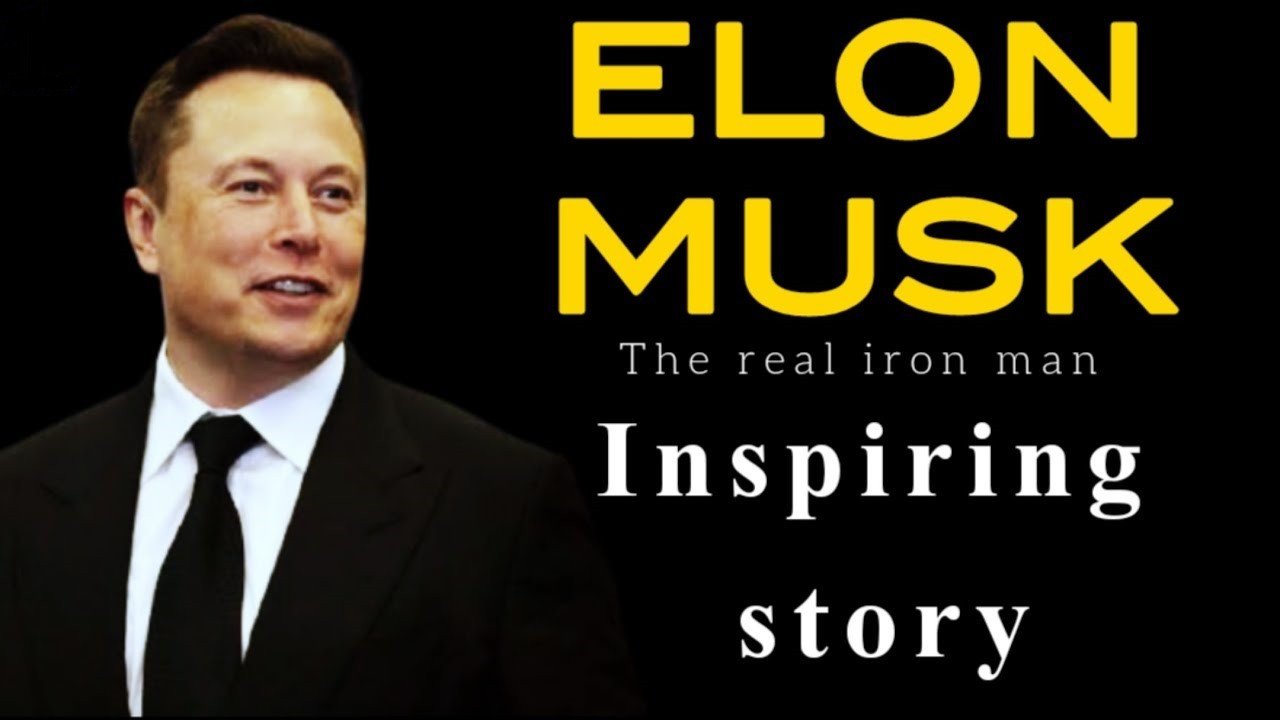
From $500 to “$852 Billion”: The Elon Musk Blueprint for Building Unstoppable Wealth
A story-driven breakdown of Musk’s high-conviction wealth arc—and the practical systems lessons behind it (separating myth, headlines, and reality).
Educational Disclaimer: This article is for educational purposes and not financial advice.
Affiliate Disclosure: Some links may earn Beelinger a commission at no extra cost to you.
TL;DR
- Headline numbers move. “$852B” appears in some trackers/outlets, while others cite materially lower figures—valuation mechanics matter.[1]
- The real pattern: concentrated ownership + relentless execution + compounding optionality.
- Practical takeaway: you don’t need rockets—build income systems and high-conviction assets that can scale beyond your hours.
Table of Contents (click for details)
From $500 to “$852 Billion”
What happens when you refuse to quit on your financial freedom—even when you’re weeks from bankruptcy?
Picture this: South Africa, 1983. A 12-year-old kid with messy hair sits in front of a computer, writing his first piece of code—a video game called Blastar. He sells it for $500.[2]
That kid? Elon Musk.
Fast forward 42 years, and that same person becomes the richest man alive ever to reach $852 billion in net worth. But here’s what nobody tells you about Elon’s journey—and what it reveals about building real, generational wealth..[1]
The PayPal Moment: When Most People Would Stop
By 1999, at age 28, Elon co-founded PayPal. When it sold in 2002, his cut was widely reported around $180 million.[3]
For most people, this is the ending. The beach house. The “I made it” moment.
Elon saw it as the beginning.
Instead of retiring, he took $100 million of his own money and bet it all on something everyone said was impossible: sending rockets to space as a private company.
“You’re going to lose everything,” they said.
“Space is for governments, not entrepreneurs,” they said.
He didn’t listen.
The Lesson for Your Financial Freedom
This is where most wealth-building advice gets it wrong. Traditional personal finance tells you to diversify, play it safe, protect what you have. But Elon’s story reveals a different truth: concentrated bets on yourself, backed by relentless execution, can create exponential outcomes.
The question isn’t whether you should take risks—it’s whether you’re building systems that compound over time, even when everyone around you thinks you’re crazy.
2008: The Moment That Separates Winners from Everyone Else
Here’s where Elon’s story gets dark—and instructive.
By 2008, both Tesla and SpaceX were weeks away from bankruptcy. Elon had one choice: save himself or save his companies.
He had $40 million left.
He split it: $20 million to Tesla, $20 million to SpaceX.
Then SpaceX’s fourth launch succeeded and NASA awarded a major contract that helped stabilize the business trajectory. Tesla survived. Both companies started to thrive.[4]
Most entrepreneurs would have cut their losses. Elon doubled down.
What This Means for Your Wealth Strategy
The traditional retirement playbook says: accumulate assets slowly, avoid risk, wait until 65 to enjoy life.
Elon’s playbook says: build (or buy) scalable assets, keep conviction on your highest-leverage opportunities, and execute relentlessly.
This isn’t about recklessness—it’s about understanding that real wealth comes from building income-generating systems that create optionality, not from hoarding cash in a savings account.
From Nearly Bankrupt to “$852 Billion”: The Compound Effect of Obsession
Today, Elon Musk’s public net worth number fluctuates based on how his assets are valued and how private-company stakes are marked. In early 2026, some outlets cite $800B+ figures while others cite lower totals—depending on methodology and assumptions.[1]
But here’s what’s remarkable:
- He still works extreme hours (by his own accounts).
- He’s planning to put humans on Mars.
- He bought Twitter for $44 billion and transformed it into X.[5]
Most billionaires retire. Elon is just getting started.
The Real Lesson Nobody Tells You
It’s not about being a genius (though that helps).
It’s not about having rich parents.
It’s not about luck.
It’s about this:
- ✅ Working when everyone else sleeps – Building wealth requires inputs most people aren’t willing to give
- ✅ Betting on yourself when everyone says you’re crazy – The highest-return opportunities look insane to outsiders
- ✅ Risking everything for what you believe in – Half-measures create half-results
- ✅ Never giving up when you’re weeks from bankruptcy – The breakthrough often comes right before most people quit
- ✅ Keep building even after you “make it” – Financial freedom isn’t the finish line—it’s the starting block
Your Elon Musk Moment: Building Your Own Trajectory
You don’t need to build rockets or electric cars. But you do need to understand the principles that took Elon from $500 to a world-leading net worth number:
1. Income systems beat savings strategies
Elon didn’t budget his way to wealth. He built companies that generated exponential returns. Your path to financial freedom starts with income creation, not expense optimization.
2. Concentrated conviction beats diversification
When everyone told Elon to diversify, he went all-in on Tesla and SpaceX. The biggest wealth creators double down on their highest-conviction bets.
3. Work intensity compounds over time
Elon worked extreme hours for years. Most people want the result without the input. That’s not how compounding works.
4. The risk of staying safe is greater than the risk of going all-in
In 2008, Elon could have protected his remaining capital and watched his companies fail. Instead, he risked it all.
Reclaim Your Life, Build Your Financial Freedom—The “Musk” Way
From writing code at 12 to building rockets decades later, Elon’s story is proof: financial freedom isn’t about waiting for retirement—it’s about building assets that make work optional.
The 12-year-old coding Blastar for $500. The 37-year-old splitting his last $40 million between two failing companies. The 54-year-old worth $852 billion, still working 80-hour weeks because he’s obsessed with the mission, not the money.
- That’s what happens when you refuse to quit.
- That’s what happens when you work relentlessly for what you believe in.
- That’s what happens when you build systems that compound.
Mars is waiting. So is your financial freedom.
What are you building while everyone else is sleeping?
Ready to build your own wealth trajectory?
Discover the income systems and strategies that create real optionality—not just bigger savings accounts. Because financial freedom isn’t about retiring at 65. It’s about making work optional in your 40s and 50s.
Frequently Asked Questions
How did Elon Musk get so rich?
Elon Musk became rich by founding and investing in multiple high-growth companies. He made $22 million from Zip2 in 1999, then $180 million from PayPal in 2002. Instead of diversifying, he invested everything into SpaceX and Tesla. His net worth exploded from $170 billion to $852 billion between 2020-2026 when Tesla’s stock surged. The key: concentrated ownership in transformative companies, not diversification.[3]
What was Elon Musk’s first business?
Elon Musk’s first business was selling a video game called Blastar for $500 when he was 12 years old in 1983. His first major company was Zip2, founded in 1995, which provided online city guides for newspapers. Compaq acquired Zip2 for $307 million in 1999, netting Elon $22 million at age 28.[2]
Is Elon Musk the richest person ever?
Yes. As of February 2026, Elon Musk is the richest person in recorded history with a net worth of $852 billion. This surpasses all previous billionaires including Jeff Bezos (peak ~$211B), Bernard Arnault (peak ~$230B), and historical figures like John D. Rockefeller and Andrew Carnegie when adjusted for inflation.[1]
How much money does Elon Musk make a day?
Elon Musk’s wealth fluctuates based on Tesla and SpaceX stock prices. Between 2020-2026, his net worth increased by approximately $1.1-1.3 billion per day on average based on overall growth. However, this isn’t traditional “income”—it’s unrealized gains from equity appreciation in his companies.[1]
Did Elon Musk inherit his wealth?
No. Elon Musk did not inherit significant wealth. While his family was middle-class in South Africa, Elon built his fortune from scratch starting with the $22 million from Zip2, then $180 million from PayPal, which he reinvested entirely into SpaceX and Tesla. He nearly went bankrupt in 2008 before both companies became successful.[3]
How many hours does Elon Musk work per week?
Elon Musk consistently works 80-100 hours per week and has maintained this schedule for over 15 years. He regularly sleeps at factories during production crises, works 7 days a week when necessary, and personally involves himself in engineering and production problems at 3 AM during critical periods.
How did Elon Musk become a billionaire?
Elon Musk became a billionaire after Tesla’s IPO in 2010 and subsequent stock appreciation. However, his wealth truly exploded between 2020-2026 when Tesla became the world’s most valuable automaker and SpaceX dominated the commercial space industry. His willingness to risk everything in 2008—investing his last $40 million into both companies when they were weeks from bankruptcy—is what ultimately created his fortune.
What companies does Elon Musk own?
Elon Musk owns significant stakes in multiple companies:
Sources & Further Reading
- Forbes Real-Time Billionaires List
- Bloomberg Billionaires Index – Elon Musk
- Four takeaways from Walter Isaacson’s biography of Elon Musk
- Walter Isaacson, “Elon Musk” (2023)
- Net worth methodology discussion + cross-tracker comparison (Forbes/CNW/Bloomberg) [1]
- Blastar background (sold for $500 claim) [2]
- Time profile covering Zip2/PayPal figures and early wealth arc [3]
- SpaceX timeline (2008 success + NASA contract reference) [4]
- Twitter acquisition ($44B) and transition context [5]
Disclaimer Note: Net worth figures fluctuate daily based on stock market performance and private company valuations. The 2 billion figure represents Elon Musk’s estimated net worth as of February 2026 per Forbes and Bloomberg tracking.