Your Venmo Balance Is Not a Bank Account. Move Your Cash Before It Becomes a Risk
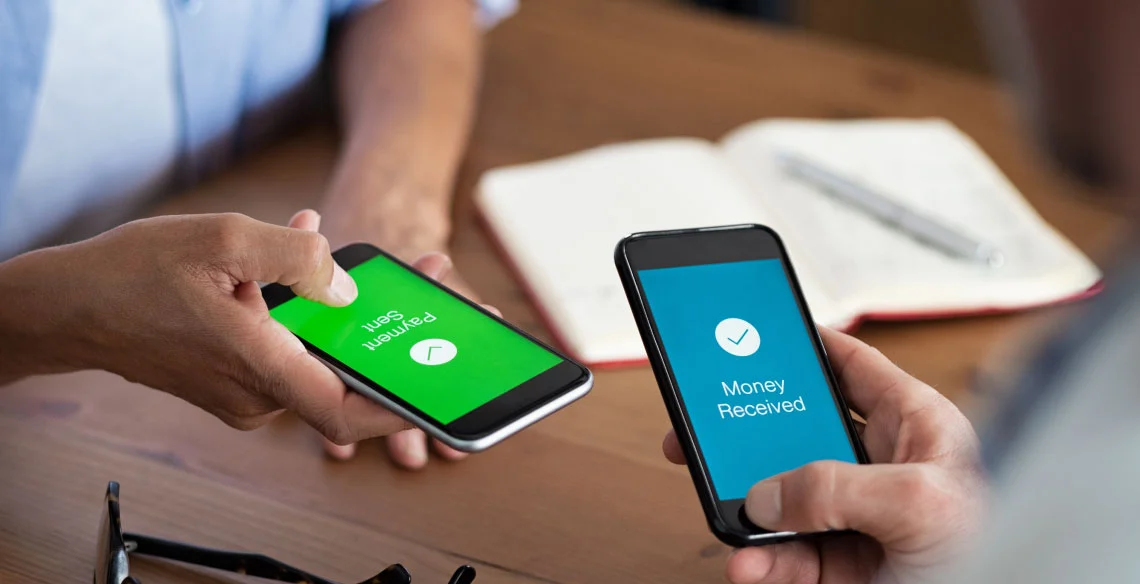
Payment apps are useful for sending money, but cash sitting inside Venmo, Cash App, PayPal, or similar apps may not have the same federal deposit insurance protection as money in an insured bank or credit union.
Educational Disclaimer: This article is for educational purposes only and should not be treated as financial, legal, banking, tax, or consumer-protection advice.
Reader note: Payment app terms, partner-bank arrangements, pass-through insurance rules, account features, and user agreements can change. Review your app’s current disclosures and move important cash to an insured bank or credit union when protection matters.
Affiliate disclosure: Beelinger may earn compensation when readers click certain financial product links. That compensation does not change our editorial framing.
Quick answer
- Main rule: Use payment apps for transfers, not for storing your emergency money.
- Why it matters: Funds held inside nonbank payment apps often are not protected by federal deposit insurance.
- Safer home: Move larger balances to an FDIC-insured bank or NCUA-insured credit union account.
- Small balances: Keeping a small amount for near-term payments may be convenient, but hundreds or thousands of dollars deserve stronger protection.
- Insurance nuance: Some app-linked features may offer pass-through insurance only if specific conditions are met.
- Best habit: Set a weekly reminder to sweep leftover app balances back into your checking or savings account.
Beelinger verdict: Payment apps are tools, not savings accounts
Venmo, Cash App, PayPal, and similar apps can be useful for splitting bills and receiving quick payments. But they should not become your backup savings account. If the money matters, move it to an insured bank or credit union account where deposit insurance rules are clearer.
Why This Matters Now
That $400 sitting in Venmo, Cash App, or PayPal may feel like a small emergency fund. It may even feel safer than leaving it in your checking account because it is out of sight and easy to use when you need to pay a friend, split rent, or cover a weekend expense.
But payment apps are not bank accounts. And the money you leave sitting inside them may not have the same federal protections as money held at an insured bank or credit union.
That is the warning behind a Consumer Financial Protection Bureau consumer advisory, which says funds stored in nonbank payment apps often are not protected by federal deposit insurance. Clark Howard also renewed the warning in a July 13 article, urging consumers to move app balances back into insured accounts.
Beelinger takeaway: Use payment apps for sending and receiving money. Use insured bank and credit union accounts for storing money you cannot afford to lose access to.
Payment apps have become part of everyday money life. You might use Venmo to split dinner, Cash App to get paid back for concert tickets, or PayPal to receive money from a marketplace sale.
The problem starts when the money stays there. According to the CFPB, money received in a payment app usually remains in the app until you manually move it to a linked bank, credit union, or card account. That makes it easy to accidentally treat your app balance like a mini checking account.
But a $400 cushion in a payment app is not the same as $400 in an FDIC-insured bank account or an NCUA-insured credit union account.
What Deposit Insurance Does, and What Payment Apps May Not Do
When your money is deposited directly in an insured bank or credit union, federal deposit insurance generally protects eligible deposits up to applicable limits if that institution fails. The CFPB notes that the FDIC and NCUA protect deposits up to $250,000 under the same owner or owners.
Payment apps are different. They are usually nonbank companies. Some may hold funds through partner banks or offer certain products that may qualify for pass-through insurance if specific conditions are met. But that coverage can be confusing, limited, or dependent on extra steps, such as signing up for a branded card or direct deposit.
The CFPB’s warning is not that every dollar in every payment app will disappear. It is that consumers may not know whether their specific balance is insured, where it is being held, or what would happen if the payment app company had financial trouble.
The uncertainty is the risk
Pass-through insurance, when available, may protect against the failure of the partner bank or credit union holding funds. It may not protect you against every problem at the payment app company itself, and access to funds may still be delayed.
| Where the money sits | What you may assume | What to verify |
|---|---|---|
| Insured bank account | Eligible deposits are generally protected up to FDIC limits if the bank fails. | Bank is FDIC-insured and your balances fit within coverage limits. |
| Insured credit union account | Eligible deposits are generally protected up to NCUA limits if the credit union fails. | Credit union is federally insured and your balances fit within coverage limits. |
| Nonbank payment app balance | The app balance may feel like cash in a checking account. | Whether the balance has deposit insurance, what steps are required, and what happens if the app company fails. |
But I Only Keep a Little Money There
A small app balance for convenience is different from using Venmo, Cash App, or PayPal as a savings account.
If you keep $15 or $30 in an app because you are going to use it this week, that may not change your financial life. But if you leave hundreds or thousands of dollars parked there, you are taking risk without getting much benefit.
You may also be giving up interest. Many payment app balances do not pay meaningful interest, while insured high-yield savings accounts may help your cash grow while keeping it accessible.
For someone trying to build a first emergency fund, that matters. Your cushion should be boring, protected, and easy to reach when something breaks. It should not depend on a payment app’s business model, user agreement, or partner-bank arrangement.
The Practical Rule: Sweep Your Balance
The best habit is simple: when money lands in a payment app, move it.
If a friend pays you back, transfer the money to your checking account. If you sell something online and get paid through PayPal, move the balance to an insured account. If you use Cash App for quick transfers, do not let the balance quietly become your backup savings.
A good rule:
- Keep only what you are comfortable losing access to temporarily.
- Move larger balances to an FDIC-insured bank or NCUA-insured credit union.
- Do not use payment apps as your emergency fund.
- Review whether any app-linked card or direct deposit feature changes your insurance status, but do not assume it does.
- Set a weekly reminder to sweep leftover balances.
Why reminders work
This is mostly a behavior problem. Payment apps are designed to be fast and convenient. They are not designed to make you pause and ask whether the app is the best long-term home for your cash.
What to Do Today
Open your payment apps and check the balances. Then move anything that is not needed for an immediate payment into an insured checking or savings account.
Next, decide what each account is for. Your payment apps can be for sending and receiving money. Your checking account can be for bills and everyday spending. Your savings account can be for your emergency fund or short-term goals.
That setup gives every dollar a job, and it keeps your backup money somewhere safer than an app balance.
| Money job | Better home | Reason |
|---|---|---|
| Splitting dinner or rent | Payment app for short-term transfer only | Convenient for quick peer-to-peer payments. |
| Monthly bills | Checking account | Easier to track autopay, deposits, and cash flow. |
| Emergency fund | Insured savings account | Better protection and possible interest. |
| Short-term savings goal | Insured savings or money market account | Keeps cash accessible without leaving it in an app balance. |
The Bottom Line
Venmo, Cash App, PayPal, and similar apps are useful tools. But they are not substitutes for a real bank or credit union account.
If you have cash sitting in a payment app, move it to an FDIC- or NCUA-insured account today. The risk may feel invisible, especially when the app works smoothly, but your emergency money deserves stronger protection than convenience alone.
Beelinger can help you organize your cash flow, choose the right home for your money, and build an emergency fund that is actually there when you need it.
Need help deciding where your cash should live?
Payment apps, checking accounts, and savings accounts each have a job. The trick is making sure your emergency money is not sitting in the wrong place.
Beelinger Money Coach can help you organize your cash flow, set up account roles, and build an emergency fund that is easier to protect and manage.
FAQ
Is money in Venmo, Cash App, or PayPal federally insured?
Not always. The CFPB warns that funds stored in nonbank payment apps often are not protected by federal deposit insurance. Some app features may offer pass-through insurance if specific conditions are met, but you should not assume every app balance is protected.
What is the safest place for emergency cash?
Emergency cash is usually better kept in an FDIC-insured bank account or NCUA-insured credit union account, within applicable insurance limits, because the protection rules are clearer than they are for many payment app balances.
Can I keep a small balance in a payment app?
Keeping a small balance for near-term payments may be convenient, but larger balances should generally be moved to an insured checking or savings account. A payment app should not be your emergency fund.
What does pass-through insurance mean?
Pass-through insurance may protect funds held at a partner bank or credit union if legal requirements are met. It may not protect against every issue at the payment app company itself, and it may depend on extra steps such as signing up for a branded card or direct deposit.
What should I do with money sitting in payment apps today?
Open your payment apps, check your balances, and transfer any money you do not need for immediate payments into an insured checking or savings account. Then set a weekly reminder to sweep leftover balances.
Sources
- Consumer Financial Protection Bureau: Consumer advisory on payment app balances and deposit insurance
- Clark.com: Why You Shouldn’t Leave Cash in Payment Apps
- FDIC: Deposit insurance resources
- NCUA: Share Insurance Fund
Payment app terms, deposit insurance status, and pass-through insurance conditions can change. Check your app disclosures and your bank or credit union insurance status before relying on any balance as emergency cash.
More from Beelinger
-
Investing 5 Best Assets You Should Build for Financial Security
5 Assets Every Adult Should Build The shift from working for money to making money work for you…
-
Budgeting Apps How to Claim YNAB’s Free 12 Months for Students (No Fee)
Get a Free Year of YNAB as a Student: $109 Value, No Confirmed Deadline College students can get…
-
Banking How to Get a $400 Bonus From Chase Total Checking
How to Get a $400 Chase Total Checking Bonus Before the Deadline Chase is offering a $400 cash…
-
Banking Chime review 2026: How to avoid banking fees and Save More
How to Stop Paying Bank Fees and Keep More of Your Money Every Month Tired of getting nickel-and-dimed?…