Credit Card Reviews: Costs, Rewards, and Best Fit
Use these reviews to see what each card can return to you after fees, where it earns the most, what benefits are genuinely useful, and what could make the card a poor fit. The goal is to help you choose a card that improves your finances rather than simply adding another account to your wallet.
Start with the filter above, then use each card’s Choose it if and Skip it if guidance. A welcome offer can improve first-year value, but the ongoing fee and rewards structure matter more if you plan to keep the card.

The rare no-fee card that rewards you on nearly every dollar you spend.
The Chase Freedom Unlimited earns 5% on travel purchased through Chase Travel, 3% at restaurants and drugstores, and 1.5% on every other purchase with no category activation. A no-fee 2% card earns more on uncategorized purchases, but Freedom Unlimited can win when dining, drugstore, or Chase Travel spending makes up enough of your budget.
The current public offer is a $200 bonus after $500 in purchases during the first 3 months. If you also carry an eligible Chase Sapphire card, you can combine the rewards and gain access to Chase’s airline and hotel transfer partners. That makes Freedom Unlimited more useful for readers building a Chase travel setup than its cash-back rate alone suggests.
✓ Pros
- No annual fee — zero risk to hold long-term
- 1.5% floor on all purchases, no caps
- 5% on Chase Travel bookings
- Points upgrade to transferable with a Sapphire card
- 3% on dining and drugstores
- 0% intro APR on purchases (15 months)
✕ Cons
- 5% capped to Chase Travel portal
- Points worth only 1 cent without a Sapphire card
- No airline or hotel transfer on its own
- No premium travel perks (lounge, insurance)
Choose it if: you want one no-fee card with bonus categories and a usable return on uncategorized spending.
Skip it if: a flat 2% card would earn more on most of your purchases.
The best no-fee cash back card if you spend across categories. The 1.5% floor is genuinely useful for all the spending that doesn't fit a bonus category — utilities, rent payments, online shopping, subscriptions. The upgrade path to transferable points (via pairing with Sapphire Preferred) makes this card far more valuable than it looks on the surface.
Opens Chase's secure application. Rates and terms subject to change.
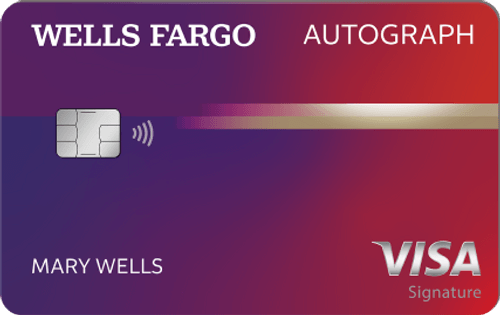
Useful travel rewards for real life—commuting, dining, gas, phone service, and trips—without a yearly fee.
Autograph rewards categories that many young professionals use every week. The 3x list covers travel, transit, restaurants, gas stations and EV charging, popular streaming services, and phone plans. It also charges no foreign transaction fee and allows transfers to select airline and hotel partners.
The current offer is 20,000 points after $1,000 in purchases during the first 3 months, worth $200 as cash redemption. The card also includes a 0% introductory APR on purchases for 12 months, followed by the applicable variable APR. Do not use that promotion as a reason to spend beyond your payoff plan.
✓ Pros
- No annual fee or foreign transaction fee
- 3x on six practical spending categories
- Points can transfer to select travel partners
- Cellphone protection when requirements are met
- Reasonable $1,000 bonus spending target
✕ Cons
- Only 1x outside listed bonus categories
- Transfer-partner list is smaller than Chase or Amex
- No airport lounge access
- Wells Fargo application restrictions may apply
Choose it if: commuting, dining, gas, phone service, and occasional travel make up a large share of your spending.
Skip it if: most purchases fall outside the 3x categories or you want premium airport benefits.
A strong travel starter card for readers who refuse to pay an annual fee. It earns more than a flat-rate card across several common categories while preserving the option to use travel partners later.
Opens Wells Fargo's secure application. Rates and terms subject to change.
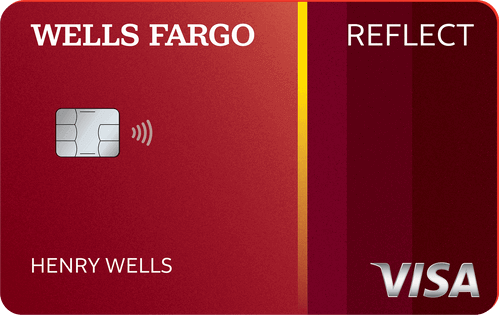
The longest interest-free window on the market — both for new purchases and transferred balances.
This card doesn't earn rewards — it earns time. Twenty-one months of 0% APR on both purchases and balance transfers is the longest available among major US card issuers in 2026. If you're paying down a credit card balance transferred from a high-APR issuer, this card can save you hundreds or thousands in interest.
Balance transfer fee applies (typically 3–5%), so the math is: compare total interest you'd pay over 21 months at your current rate vs. the one-time transfer fee. For most readers carrying $3,000+ at 20%+ APR, the answer is clear.
✓ Pros
- 21 months 0% — longest on purchases and transfers
- No annual fee
- Cell phone protection benefit (pay bill with card)
- No penalty APR for late payments
✕ Cons
- No rewards program — purely a rate card
- Balance transfer fee applies at opening
- High ongoing APR once intro period ends
- Not worth keeping after intro period unless you use cell phone benefit
Choose it if: a long introductory APR can help you finance a planned purchase or repay debt on schedule.
Skip it if: you need long-term rewards after the promotional period ends.
Right tool, right job — but only if you're committed to paying off the balance. This card makes most sense as a tactical instrument: transfer a balance, set up auto-minimum-payments, pay as much as possible, and be done before month 21. If you treat it as a spending card, you'll get hurt when the APR kicks in.
Opens Wells Fargo's secure application. Rates and terms subject to change.
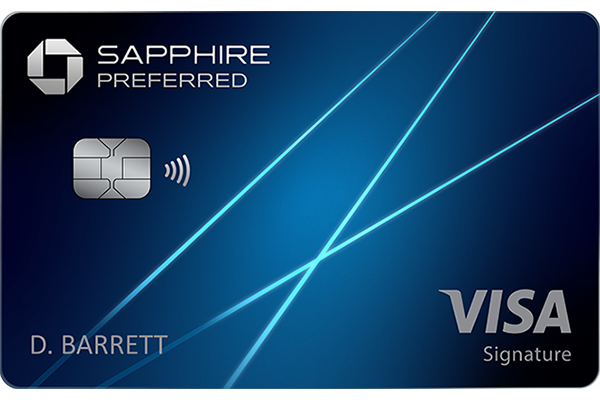
The benchmark travel card — still the best starting point for most people who fly even occasionally.
The public Chase offer is currently 75,000 points after the required spending threshold. Welcome offers can change quickly, so verify the live offer before applying. That's only part of the value. But the card earns its long-term keep through the same 14 transfer partners: United, Southwest, Air France/KLM, British Airways, Singapore Airlines, Hyatt, and more. When you find award availability on a partner you wouldn't normally book with, these points pay off.
The card now includes up to a $100 annual Chase Travel hotel credit, which can materially reduce the effective cost if you would use that benefit anyway. For anyone who flies once or twice a year and eats at restaurants, this card will return more value than it costs every single year.
✓ Pros
- 75K current public welcome offer; verify before applying
- 14 airline and hotel transfer partners
- Points worth 25% more through Chase Travel portal
- Up to $100 annual Chase Travel hotel credit
- 3x on dining, select streaming, online groceries
- Primary rental car insurance
✕ Cons
- 5x only through Chase Travel portal
- No lounge access at this fee tier
- Only one Sapphire card allowed at a time
- Must use Chase Travel to get 25% redemption bonus
Choose it if: you travel, value transfer partners, and can recover the annual fee through rewards and benefits.
Skip it if: you want cash back or do not want to manage travel redemptions.
Our best all-purpose travel pick for many readers in September 2026. The welcome offer can cover multiple years of annual fees when redeemed well, but ongoing value matters more than the first-year bonus. The transfer partners give you flexibility no airline-specific card can match. The up-to-$100 annual Chase Travel hotel credit can offset the fee for readers who would use it anyway. This is the card we'd recommend as the first travel card for most Beelinger readers.
Opens Chase's secure application. Rates and terms subject to change. Bonus offer subject to change.
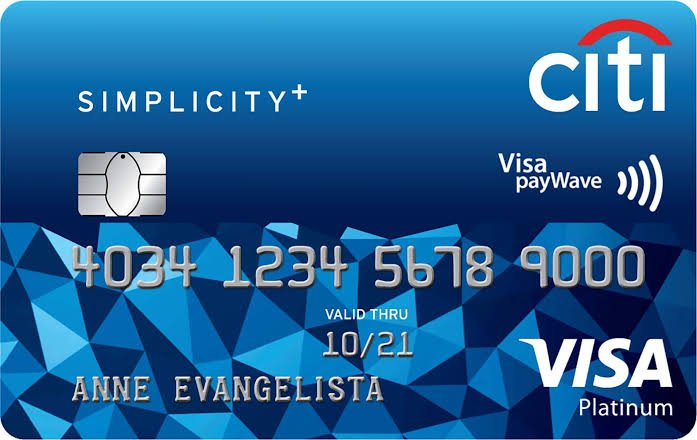
The most forgiving balance transfer card — built for people actually committed to paying off debt.
The Citi Simplicity has two standout features that separate it from other balance transfer cards: no late fees and no penalty APR. Most cards will spike your APR to 29%+ if you miss a payment. This one won't. That matters if your life is unpredictable while you're paying down debt.
The current offer provides 0% introductory APR for 18 months on purchases and balance transfers. Transfers completed within the first 4 months carry an introductory fee of 3% of each transfer, with a $5 minimum; after that, the fee is 5%, with a $5 minimum. There is no rewards program—this card is a debt-payoff tool, not a lifestyle card.
✓ Pros
- No late fees ever — critical safety net
- No penalty APR for missed payments
- Long 0% intro BT period
- No annual fee
- Low BT intro fee compared to alternatives
✕ Cons
- No rewards program — purely a rate card
- Balance transfer fee still applies
- Shorter 0% period on purchases vs. Wells Fargo Reflect
- Not worth keeping long-term after debt is paid off
Choose it if: transferring existing card debt can save more interest than the transfer fee costs.
Skip it if: you cannot repay the transferred balance before the introductory period ends.
The most human balance transfer card available. The no-late-fee, no-penalty-APR structure removes two of the biggest debt-trap mechanisms that card issuers rely on. If you're using a balance transfer card to genuinely pay down debt — not kick it down the road — this is the one we'd recommend over the Wells Fargo Reflect for BT specifically. Use it as intended, then close or repurpose.
Opens Citi's secure application. Rates and terms subject to change.
Two percent on every dollar, no annual fee, no games — just the clearest cash back math available.
The Active Cash delivers what it promises: an uncapped 2% cash back on net purchases, with no annual fee. There is no activation, rotating category, or portal required for the base rate. The current terms offer a $200 cash rewards bonus after $500 in net purchases within 3 months, plus 0% introductory APR for 12 months on purchases and qualifying balance transfers.
Compared to the Chase Freedom Unlimited (1.5% floor, $0 fee), the Active Cash wins on the base earn rate. It doesn't have the same upgrade path to transferable points, but for readers who want cash — not miles — this is the better choice. The cell phone protection benefit (when you pay your wireless bill with the card) adds a practical perk.
✓ Pros
- Uncapped 2% on everything — no exceptions
- No annual fee
- $200 welcome bonus after the required spend
- Cell phone protection benefit included
- Simple redemption — cash, statement credit, or checking
✕ Cons
- No points upgrade path (unlike Freedom Unlimited)
- No travel perks or transfer partners
- Foreign transaction fee applies
- Less valuable than Freedom Unlimited for Chase ecosystem users
Choose it if: you want uncomplicated, unlimited cash back without an annual fee.
Skip it if: your spending is concentrated in categories where another card earns substantially more.
The best pure cash back card with no annual fee. If you want simplicity and you're not interested in playing the points game, the Active Cash delivers the highest uncapped flat rate available at $0 annual cost. The note on foreign transaction fees is worth flagging: keep a no-FTF card in your wallet for international travel.
Opens Wells Fargo's secure application. Rates and terms subject to change.

A secured card that keeps fees low and still earns cash back while you build a positive payment record.
Discover reports account activity to Equifax, Experian, and TransUnion. Depending on creditworthiness, a refundable deposit of $49, $99, or $200 can provide a starting $200 credit line. The deposit does not pay your bill; you must still make every monthly payment.
You can earn 5% cash back in changing quarterly categories up to the quarterly maximum after activation, plus 1% on other purchases. Discover also matches the cash back earned at the end of the first year for new cardmembers. Treat those rewards as a bonus—the main value is building an on-time payment history at no annual cost.
✓ Pros
- No annual fee
- Reports to all three major credit bureaus
- Refundable deposit with responsible account management
- Cash back is uncommon on secured cards
- Automatic reviews may lead to deposit return and an unsecured account
✕ Cons
- Security deposit is required
- 5% categories require activation
- Low starting limit can make utilization rise quickly
- Graduation timing is not guaranteed
Choose it if: you need a realistic path to build credit and can pay every statement on time.
Skip it if: you already qualify for an unsecured no-fee rewards card.
A practical credit-building tool, not a borrowing solution. Use one or two small recurring purchases, keep the reported balance low, and pay in full. The strongest return is a healthier credit file—not the rewards.
Opens Discover's secure application. Approval, deposit, rates, and terms are subject to the issuer's review.
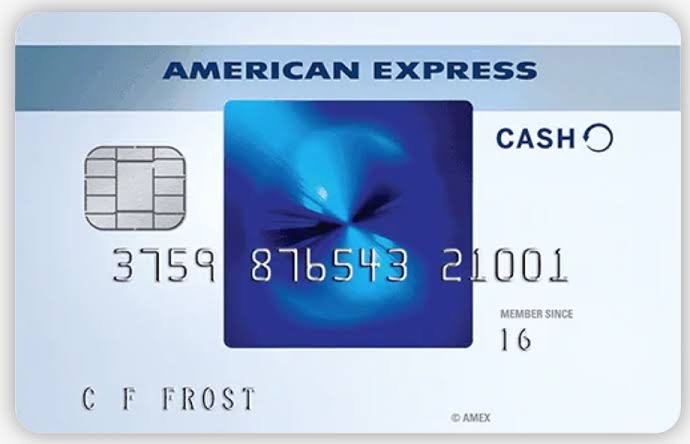
For households spending $500/month on groceries, this card earns more than almost any card on the market.
A family spending $500/month on groceries earns $360/year in cash back from the supermarket category alone — more than triple the $95 annual fee. The 6% on select streaming services adds another $50–80/year depending on your subscriptions. That makes the effective net value of this card strongly positive before you spend a dollar on gas or transit.
The cap at $6,000/year ($500/month) on the 6% supermarket rate means ultra-high grocery spenders will see some earnings plateau. At that point, a second flat-rate card (like the Active Cash) handles overflow. Terms apply. See Amex for current welcome offer details.
✓ Pros
- 6% at U.S. supermarkets on up to $6,000 per year, then 1%
- 6% on select streaming services
- 3% on transit and U.S. gas stations
- As high as $300 cash back after the required spend*
- First year no annual fee
- 0% introductory APR for 12 months on purchases and balance transfers
✕ Cons
- 6% grocery rate capped at $6,000/year
- $95 fee after year one
- Only 1% on non-category spend
- 2.7% foreign transaction fee
- Supermarkets excludes Walmart and Target
Choose it if: your eligible grocery and streaming spending comfortably offsets the annual fee.
Skip it if: you spend modestly at U.S. supermarkets or prefer a no-fee card.
A high-earning household card when groceries and streaming dominate your budget. At $300 per month in eligible U.S. supermarket spending, the 6% category earns $216 per year before streaming, transit, and gas rewards. Compare that return with a no-fee alternative before the $95 annual fee begins in year two. Pair with a flat-rate card only if the extra complexity is worthwhile.
Opens American Express' secure application. Terms apply. See rates and fees.
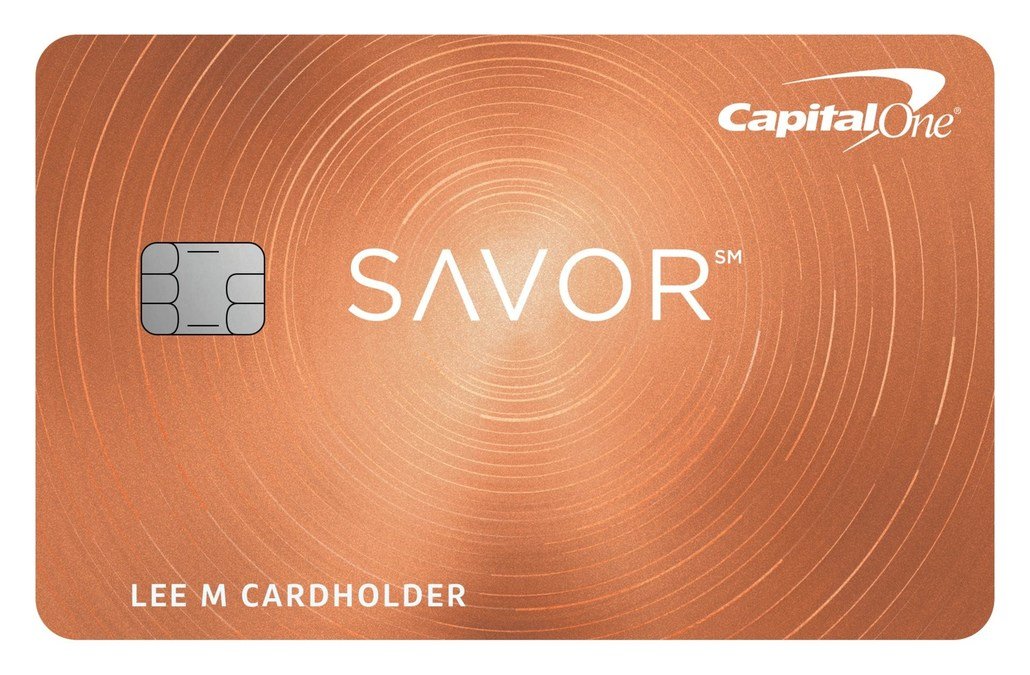
A strong $0-fee choice when dining, groceries and entertainment make up a large share of your spending.
The Savor covers categories where many young professionals and families spend regularly: restaurants, eligible grocery stores, entertainment, and popular streaming services. It earns unlimited 3% cash back in those categories and 5% on hotels, vacation rentals, and rental cars booked through Capital One Travel. The current offer adds a $200 bonus after $500 in purchases within the first 3 months.
The current Savor product has a $0 annual fee, which materially improves the long-term math. The combination of dining, grocery and entertainment rewards in one card is convenient for readers whose spending is concentrated in those categories.
✓ Pros
- 3% on dining, groceries, and entertainment combined
- 5% on eligible Capital One Travel bookings
- No foreign transaction fees
- $200 welcome bonus after the required spend
- 0% introductory APR for 12 months on purchases and balance transfers
- Simple cash back — no transfer complexity
✕ Cons
- No elevated flat-rate return outside bonus categories
- 1% base rate on non-category spend
- No travel transfer partners for miles aspirants
- Grocery excludes Walmart and Target (typically)
Choose it if: dining, entertainment, groceries, and streaming are major parts of your budget.
Skip it if: most of your spending falls outside its bonus categories and a higher flat-rate card would earn more.
The clearest single-card solution for dining-heavy spenders. If dining, groceries and entertainment are major parts of your budget, this $0-fee card can be a strong everyday fit. Pair it with a higher flat-rate card only if the extra complexity is worth the incremental rewards.
Opens Capital One's secure application. Rates and terms subject to change.

Separate business spending and earn a predictable return without tracking categories or paying a yearly fee.
Ink Business Unlimited earns 1.5% cash back on every eligible purchase with no categories to activate. The simple structure fits side hustles, freelancers, and growing businesses whose expenses are spread across software, supplies, advertising, travel, and everyday purchases.
The current public offer is $750 bonus cash back after $6,000 in purchases during the first 3 months. That is a high threshold—about $2,000 per month—so the bonus is valuable only when normal business expenses can meet it. The card also includes 0% introductory APR on purchases for 12 months, followed by the applicable variable APR.
✓ Pros
- No annual fee
- Unlimited 1.5% cash back on business purchases
- Strong $750 welcome offer
- Employee cards at no additional cost
- Rewards can become transferable when combined with an eligible Chase card
✕ Cons
- $6,000 bonus spending requirement is high
- Lower return than category-focused business cards
- Foreign transaction fee applies
- Business eligibility is required
- 0% APR can encourage overspending without a payoff plan
Choose it if: your business has varied expenses and can meet the welcome-offer target through planned purchases.
Skip it if: your business spend is low, concentrated in higher-earning categories, or mainly outside the United States.
A clean first business card for entrepreneurs who value simplicity. It can separate personal and business purchases while earning cash back, but never stretch cash flow or carry high-interest debt merely to earn the bonus.
Opens Chase's secure application. Business eligibility, approval, rates, and terms are subject to issuer review.
A strong no-annual-fee student card for dining, grocery and entertainment spending.
Student credit cards are mostly disappointing — low earn rates, restrictive approval requirements, or fees that eat into modest earnings. The Savor Student card stands out by giving students the same dining and grocery earn rate as the non-student Savor card with no annual fee and more accessible credit requirements.
The current $50 welcome bonus requires $100 in purchases within the first 3 months, but students should only pursue it with purchases they already planned to make. Capital One also advertises no annual fee and no foreign transaction fees. The real value is the chance to build payment history while earning rewards on common student spending.
✓ Pros
- 3% on dining, grocery, and entertainment — no annual fee
- Accessible for limited or building credit histories
- $50 welcome bonus after $100 in purchases within 3 months
- Reports to all three credit bureaus
- Upgrade path to regular Savor card
✕ Cons
- 1% on everything outside bonus categories
- Lower credit limits initially
- No travel perks or transfer partners
- Welcome offer can change or disappear
Choose it if: you are an eligible student building credit and spend regularly on dining or groceries.
Skip it if: you are likely to carry a balance; interest can erase the rewards quickly.
A strong first rewards card for eligible students who eat at restaurants or cook at home. The $0 annual fee and useful category rates make it practical to keep while building credit. Pay every statement on time and preferably in full; approval, starting limits, and future product-change options are never guaranteed.
Opens Capital One's secure application. Rates and terms subject to change.
Best Credit Cards for Cash Back
For cash back, the best card is usually the one that matches your normal spending without forcing you to track categories you will forget. From this list, Wells Fargo Active Cash® is the simplest flat-rate option, Chase Freedom Unlimited® is stronger for readers who value its bonus categories or pair it with a Sapphire card, and Blue Cash Preferred® can fit households with substantial eligible supermarket spending.
Quick cash-back decision
- Want one simple rate? Start with Wells Fargo Active Cash®.
- Already use Chase or want travel flexibility later? Compare Chase Freedom Unlimited®.
- Spend heavily at eligible U.S. supermarkets? Compare Blue Cash Preferred® and calculate whether the annual fee is worth it.
- Dining, entertainment, and groceries matter most? Compare Capital One Savor’s current no-fee structure.
Best Credit Cards for Travel
Travel cards make the most sense when you pay in full and can use the rewards without changing your behavior just to justify the fee. Chase Sapphire Preferred® is our flexible starting point for travelers who want transfer partners. Wells Fargo Autograph℠ is the more practical no-fee choice for commuters and occasional travelers.
Quick travel-card decision
- First travel card: compare Sapphire Preferred for flexible points and transfer partners.
- Want rewards without an annual fee: compare Wells Fargo Autograph for travel, transit, dining, gas, phone service, and streaming.
- Want transferable points: compare Sapphire Preferred and confirm that normal spending can earn the welcome offer.
- Want airport lounge access: this shortlist deliberately favors lower-cost cards; compare the full cost of a premium card separately before applying.
Best Credit Cards With No Annual Fee
A no-annual-fee card can be a strong long-term choice because there is no yearly fee to overcome. The tradeoff is that some premium rewards, protections, and travel perks may be weaker. Compare the card’s earn rate and usefulness rather than assuming a fee automatically means better value.
Top no-fee picks at a glance
- Best overall: Chase Freedom Unlimited® — 1.5% floor on everything, upgrades to transferable points with Sapphire
- Best flat cash back: Wells Fargo Active Cash® — clean 2% on net purchases, $200 welcome bonus
- Best for groceries + streaming: Capital One Savor — 3% in both categories with no annual fee
- Best 0% APR window: Wells Fargo Reflect® — 21 months on purchases and qualifying balance transfers, with no annual fee
- Best for building credit: Discover it® Secured — $0 annual fee, credit-bureau reporting, and cash back
- Best for entrepreneurs: Ink Business Unlimited® — 1.5% on business purchases with no annual fee
- Best for students: Capital One Savor Student — 3% dining/grocery at zero annual cost
How to Compare Credit Cards
A useful credit card comparison starts with your repayment behavior and ongoing costs, not the welcome bonus. The bonus is temporary. The annual fee, APR, rewards structure, and redemption friction affect you for as long as you keep the card.
Step 1: Map your top 3 spend categories
Look at your last 3 months of statements. Where did most of your dollars go? Restaurants? Groceries? Gas? Travel? The card that earns best in those categories will outperform a theoretically "better" card every year. Don't pick a travel card if 70% of your spend is on groceries.
Step 2: Be honest about the fee math
For any card with an annual fee: subtract every credit you would actually use — not might use — from the fee. What's left? That's your real net cost. Compare that to the incremental value of the card's earn rate over a free alternative. If the math doesn't work at your current spend level, pick the free card and upgrade later.
Step 3: Consider your card count and issuer mix
One well-matched card may be enough. A second card can improve rewards or provide a backup, but every additional account adds another due date, benefit schedule, and potential annual fee. Chase is widely reported to restrict many applicants who have opened five or more cards in the prior 24 months, although Chase does not publish this as a formal consumer rule. Check eligibility tools and current issuer terms before applying.
The Beelinger Two-Card Framework
For most Beelinger readers — young professionals building income streams — the optimal two-card setup in 2026 is:
- Primary card: Chase Sapphire Preferred® — earns flexible points on travel and dining with the best transfer partner roster at $95/year
- Everyday card: Chase Freedom Unlimited® — earns 1.5%+ on everything else, and those points merge with your Sapphire points and become transferable
Together, this pair earns 3x on dining, 5x on Chase Travel, and 1.5x on other eligible purchases—all feeding one rewards pool when the accounts can be combined. Total annual cost is $95. Your first-year value depends on whether you earn the welcome offer, how you redeem the points, and whether you naturally use the hotel credit.
"A credit card is a financial tool, not a lifestyle statement. The best one earns the most on how you already live — it shouldn't require you to change your habits to justify the fee."
— Beelinger Editorial, BFA Methodology Framework
The Beelinger Edge: What Most Best-Card Lists Miss
Cards from one issuer can work well together, but concentrating everything in one rewards system creates a hidden tradeoff: one program change can affect your entire strategy. It can also leave you without a usable backup if an issuer flags, freezes, or replaces an account.
If you carry two cards, consider whether a second payment network or issuer gives you a practical backup. Keep the setup simple enough that you can track every due date, fee, credit, and redemption rule.
Best Credit Cards by Credit Score
Start with a student or secured card. Focus on no annual fee, reporting to all three credit bureaus, and a realistic approval path.
See the secured-card pick →Compare no-fee cash-back cards, introductory APR offers, and entry-level travel cards. Approval is never guaranteed.
See a simple cash-back pick →A business card can separate expenses and simplify records. Apply only when you have legitimate business activity and a plan to repay purchases.
See the entrepreneur pick →How We Rank the Best Credit Cards
General-card framework
Category cards are not forced into one universal formula. For example, balance-transfer cards are judged more heavily on introductory APR length, transfer fees, transfer deadlines, ongoing APR, and annual fee. Recommended credit labels are broad guidance, not approval guarantees.
Frequently Asked Questions About the Best Credit Cards
Sources & Offer Verification
Credit card terms, welcome bonuses, APRs, and annual fees change frequently. Verify current offers directly with each issuer before applying.
- Chase Freedom Unlimited® — issuer terms
- Wells Fargo Autograph℠ — issuer terms
- Wells Fargo Reflect® — issuer terms
- Chase Sapphire Preferred® — issuer terms
- Citi Simplicity® — issuer terms
- Wells Fargo Active Cash® — issuer terms
- Discover it® Secured — issuer terms
- Blue Cash Preferred® — issuer terms (Terms apply)
- Capital One Savor — issuer terms
- Ink Business Unlimited® — issuer terms
- Capital One Savor Student — issuer terms